

One of the most common challenges Project Managers and Facility Owners face in the early stages of a project is budgeting for specialized engineering services. Unlike purchasing hardware, where prices are fixed, the cost of engineering analysis often feels like a “black box” lacking transparent pricing. Whether you are planning a new industrial facility in Saudi Arabia or upgrading a commercial tower in the UAE, the question remains: “How much should I set aside for electrical studies?”
This guide provides a clear, actionable breakdown of the cost factors and typical price ranges for essential power system studies in the GCC region for 2026. By understanding what drives the power system analysis cost, you can budget effectively and ensure you are engaging a reputable GCC engineering consultancy that delivers value, not just a report.
What Are Power System Studies and Why Are They Critical?
Power system studies are advanced engineering simulations that create a “digital twin” of your electrical network. Using specialized software, engineers simulate various operational scenarios—from normal peak loading to catastrophic fault conditions—to verify that your system is safe, reliable, and compliant.
Understanding what is power system analysis goes beyond just checking boxes. It is the only way to validate that your switchgear ratings are sufficient, your protection settings will isolate faults correctly, and your power quality meets utility standards. In the context of GCC grid compliance, where authorities like DEWA, ADDC, and SEC enforce strict standards, the importance of electrical studies cannot be overstated. They are the blueprint for a safe operational future.
Learn more about our comprehensive Power Systems Analysis services.
5 Key Factors That Determine Your Final Cost
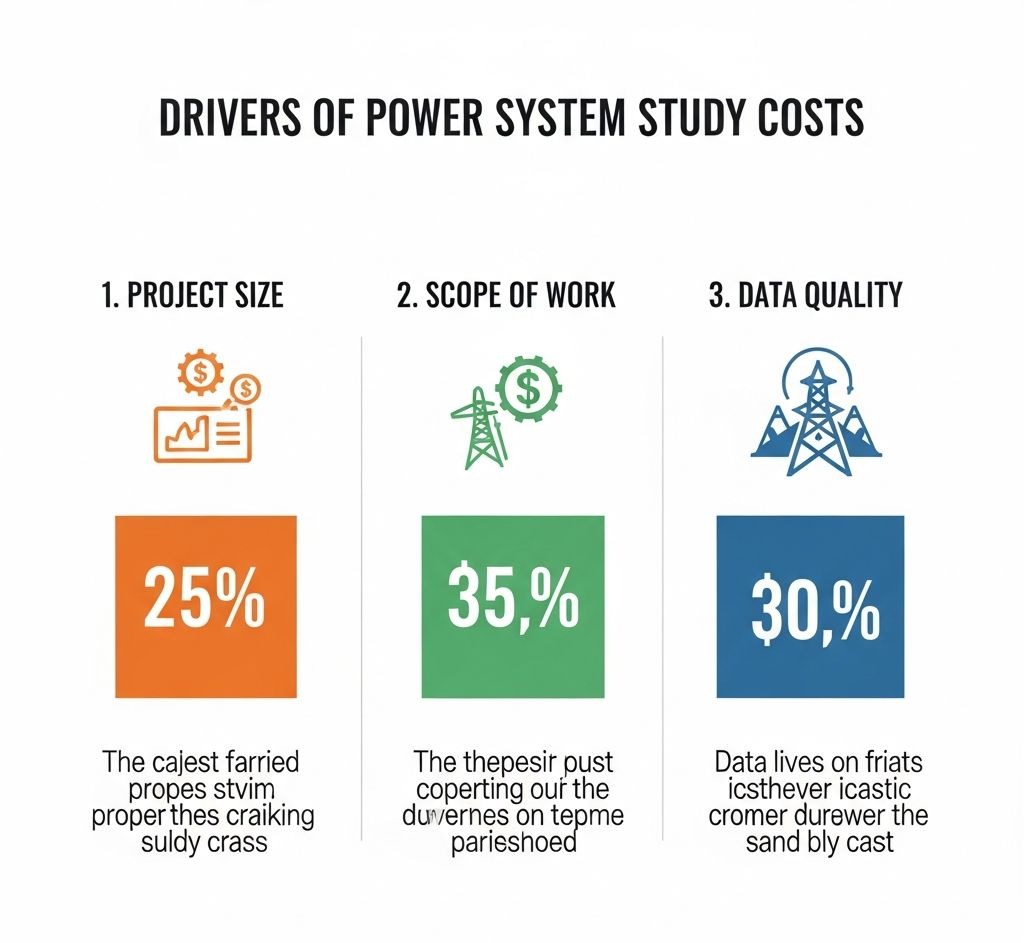
There is no “one-size-fits-all” price tag because every electrical network is unique. The following five factors are the primary drivers of your final quote.
1. Project Scale and Complexity
The most obvious factor is size. An industrial power system study for a petrochemical plant with 50 substations, on-site generation, and hundreds of motor loads requires significantly more modeling hours than a large-scale electrical analysis for a commercial high-rise. Consultants typically estimate costs based on the “bus count” (number of nodes in the system) or the number of protective devices that need coordination.
2. Type and Number of Studies Required
Not all studies are created equal. A standalone load flow study cost will be lower than a comprehensive package. Common studies include:
- Load Flow: Checks for voltage drop and overloading.
- Short Circuit: Calculates fault currents to size equipment.
- Arc Flash: Determines safety boundaries and PPE.
- Harmonic Analysis: Critical for modern plants with VFDs.
- Transient Stability: Complex analysis for on-site generation.
The more comprehensive the package, the higher the total cost, though bundling them usually offers better value (e.g., arc flash analysis pricing is often better when combined with short circuit studies). Modern power system analysis and design involves grouping these to ensure holistic coverage.
3. Data Availability and Site Accessibility
This is the hidden cost driver. “Garbage in, garbage out” applies heavily here. If your facility has up-to-date, digital Single-Line Diagrams (SLDs) and equipment datasheets, the cost is lower. However, if drawings are missing or outdated, the consultant must perform an electrical data collection survey. This involves sending engineers to your site for a physical GCC site audit to trace cables and record nameplate data, which adds man-days and travel expenses to the project.
4. Report Detail and Regulatory Requirements
Are you looking for a simple “pass/fail” compliance check, or a detailed engineering report that includes root-cause analysis and engineered mitigation solutions? Furthermore, specific GCC electricity authority compliance requirements (such as a formal submission to a utility provider) may require additional formatting, meetings, and revision cycles that impact the price. To properly analysis power system vulnerabilities, high-quality data is non-negotiable.
5. Chosen Engineering Consultant
As with any professional service, the expertise of the specialist power systems consultant GCC plays a role. While freelance engineers might offer lower rates, established firms provide liability insurance, licensed software (like ETAP or SKM), and the depth of experience to defend the study results against utility queries.
Estimated Cost Ranges for Common Studies (2026)
To help you budget, we have compiled a power system study price list based on typical market rates in the GCC for 2026. Please note these are estimated ranges for average-sized commercial to medium-industrial projects.
| Study Type | Typical Price Range (USD) | Best Suited For |
| Load Flow Analysis | $2,000 – $8,000 | Initial design validation, voltage drop checks |
| Short Circuit Analysis | $2,500 – $10,000 | Equipment rating verification, protection coordination |
| Arc Flash Risk Assessment | $3,500 – $15,000 | Workplace safety compliance (OSHA/NFPA 70E) |
| Harmonic Analysis | $4,000 – $12,000 | Facilities with VFDs, data centers, solar/wind farms |
Note: These prices can vary significantly based on the “bus count” and data availability mentioned above.
The Real Cost of Skipping a Professional Study
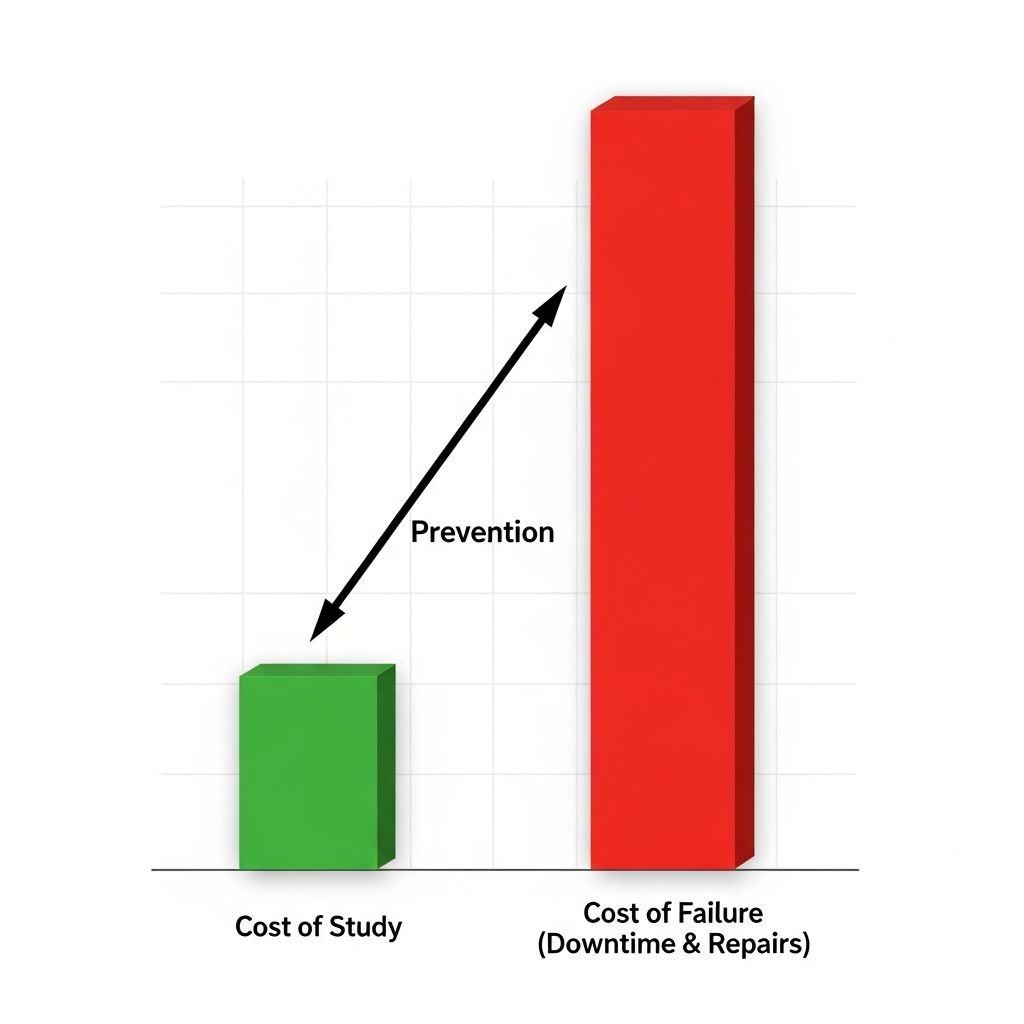
When evaluating quotes, it is vital to consider the alternative. The cost of electrical failure far outweighs the price of a study.
The risk of no power system study includes:
- Catastrophic Equipment Failure: Replacing a blown transformer or switchgear panel costs tens of thousands of dollars and weeks of lead time.
- Regulatory Fines: Failing to meet utility power factor or harmonic limits can result in monthly penalties.
- Unplanned Downtime: For a factory, one day of GCC project downtime can cost more than the entire engineering study package.
- Safety Liability: An arc flash incident resulting in injury can lead to massive legal and compensation costs.
How to Get an Accurate Quote for Your Project
To get a precise proposal quickly and avoid “padding” in the quote due to uncertainty, follow this checklist when contacting a consultant. Knowing how to request engineering quote details upfront saves time for everyone.
- Gather Documentation: Locate your Single-Line Diagrams (SLDs) and a list of major equipment (generators, transformers, large motors).
- Define the Scope: Are you building a new facility, expanding an existing one, or troubleshooting a specific problem (like tripping breakers)?
- List Required Studies: Be specific if you know what you need (e.g., “Short Circuit and Protection Coordination”).
- Check Data Availability: Be honest about whether you have accurate data or if a site survey is required to prepare for power analysis.
- Set Timelines: State your deadline for the final report.
Frequently Asked Questions (FAQs)
Q1: What is the typical timeframe to complete a power system study?
For a standard study package (like load flow and short circuit) on a medium-sized project, expect 2-4 weeks from the time all data is collected to the delivery of the draft report. Complex projects or those requiring site surveys may take 6-8 weeks.
Q2: Can’t we use software to do this ourselves?
While software licenses are available, they are expensive. More importantly, accurate studies require expert modeling skills to interpret the data correctly. Without knowledge of local GCC grid codes and standards (IEEE/IEC), “DIY” studies often result in errors that utility authorities will reject.
Q3: Are these studies required by law in the GCC?
For new utility connections or significant load modifications, yes. Utilities like DEWA, SEC, and ADDC typically require certified studies to prove the connection won’t harm the grid. Furthermore, international safety standards (like NFPA 70E for arc flash) are increasingly enforced by insurance companies and local civil defense.
Q4: Does the quote include implementing the recommendations?
Typically, no. The study serves as a diagnostic tool that identifies issues and engineers the solutions (e.g., “Change relay setting X to Y”). The actual physical implementation (turning the dials, installing capacitors) is a separate phase, though Elecwatts can certainly support you in that execution.
Conclusion
Viewing power system studies as a line-item expense is a mistake; they are a strategic investment in the longevity and safety of your asset. A few thousand dollars spent on analysis today can save millions in damages and downtime tomorrow.
Ready to get a precise quote tailored to your project?Contact our power systems specialists todaywith your requirements for a fast and confidential consultation.