

It is a scenario that plays out in boardrooms across the Gulf every year. A major industrial expansion project in the Eastern Province of Saudi Arabia requires a new lineup of 132kV transformers. The procurement team, driven by tight CAPEX targets and aggressive deadlines, issues a tender. Four bids come back. Supplier A, a relatively unknown manufacturer with aggressive pricing, undercuts the market leaders by 18%. On a spreadsheet, the decision looks obvious: selecting Supplier A saves the project $850,000 upfront. The purchase order is issued, the “savings” are banked, and the project manager is patted on the back.
Three years later, in the height of July, with ambient temperatures hitting 52°C and humidity at 90%, two of the transformers trip on high oil temperature. The cooling fans, specified to a lower standard to save cost, have failed. The gaskets, ill-suited for the harsh UV and chemical exposure of the region, have degraded, leading to oil leaks and moisture ingress. The plant shuts down for four days while emergency repairs are sourced. The cost of lost production? $4.2 million.
The “savings” of $850,000 have evaporated, replaced by a multimillion-dollar loss and a tarnished reputation.
This is the tyranny of the “Lowest Commercial Bid” (L1) mentality. In the high-stakes environment of electrical infrastructure, particularly in the harsh climatic and logistical reality of the GCC, the initial purchase price is often the least significant number in the equation. The true cost of an asset is defined by its reliability, efficiency, and maintainability over a 20 to 30-year lifespan.
For project managers and procurement leaders, the solution lies in shifting the paradigm from “Price” to Total Lifecycle Value. This requires a robust, defensible Technical Bid Evaluation (TBE) framework that quantifies quality, resilience, and support, ensuring that the Electrical Plant Procurement strategy you adopt today doesn’t become the liability you manage tomorrow.
The GCC Procurement Landscape: Local Content, Logistics, and Lead Times
Procuring electrical plant equipment in the Gulf Cooperation Council (GCC) region presents a unique matrix of challenges that standard international procurement frameworks often fail to capture. A framework imported from Europe or North America will not account for the specific regulatory, logistical, and environmental realities of the Gulf.
Navigating Local Content Requirements
The era of purely importing equipment is over. Governments across the GCC are prioritizing economic diversification and local value creation.
- Saudi Arabia (IKTVA): The In-Kingdom Total Value Add program by Aramco and broader government initiatives prioritize suppliers who manufacture, assemble, or source services within the Kingdom. A bid evaluation framework in KSA must heavily weight the supplier’s IKTVA score.
- UAE (ICV): The In-Country Value program, adopted by ADNOC and major government entities, similarly incentivizes local contribution.
- Qatar (ICV): QatarEnergy and other entities have implemented similar Tawteen initiatives.
A robust procurement framework in the UAE or KSA must therefore include a mandatory pass/fail or weighted criteria for local content certification. Failing to do so can lead to contract disqualification or financial penalties.
Logistics and Lead Times in Remote Locations
The GCC is a logistics hub, yet many energy projects are located in remote desert or offshore locations.
- Customs and Clearance: Delays at ports can be significant for specialized electrical equipment containing hazardous materials (like SF6 gas or specific transformer oils).
- Transport Risks: Moving a 100-ton transformer from Jebel Ali Port to a remote site in the Liwa Desert requires specialized heavy transport logistics. Suppliers who include “Delivery Duty Paid” (DDP) to the final site foundation, rather than just CIF to the port, offer significantly higher value by absorbing this risk.
The 100-Point Evaluation Framework: Balanced Scoring Categories
To move beyond the subjectivity of “I think this brand is better,” procurement teams need a quantitative bid scoring system. A weighted evaluation matrix transforms qualitative technical assessments into hard data that can stand up to audit scrutiny.
For critical electrical infrastructure in the GCC, a pure 50/50 Technical/Commercial split is often insufficient to protect against low-quality assets. We recommend a framework that prioritizes technical resilience.
The Recommended GCC Weighting Structure
- Technical Compliance & Resilience (40%): Does the equipment meet the specs? Is it proven in 50°C+ heat? Does it meet specific utility standards (e.g., DEWA, SEC, ADDC)?
- Commercial Price (30%): The initial CAPEX cost.
- Total Cost of Ownership / Efficiency (20%): The capitalized cost of losses (energy consumption) and projected maintenance over 20 years.
- Local Support & Value (10%): In-Country Value score, local spare parts stock, and availability of resident service engineers.
Why This Balance Matters
By allocating only 30% to the initial price, you effectively neutralize the “race to the bottom.” A cheap supplier cannot win on price alone if they fail on efficiency or local support. This structure forces suppliers to compete on value. For example, a supplier offering a premium, high-efficiency motor (IE4) will score lower on “Price” but significantly higher on “TCO/Efficiency,” potentially winning the bid despite being more expensive upfront.
[Image Placement #1]

Technical Evaluation 1: Climate Resilience and Derating Certifications
The single biggest killer of electrical equipment in the GCC is the environment. Standard IEC (International Electrotechnical Commission) ratings are typically based on an ambient temperature of 40°C. In the Gulf, internal substation temperatures can easily exceed this, and outdoor equipment faces direct solar radiation pushing surface temperatures above 70°C.
The Derating Verification
A crucial part of equipment climate testing evaluation is checking the “derating curves.”
- The Trap: A supplier offers a 2000 kVA transformer rated at 40°C.
- The Reality: At 55°C ambient, that same transformer might only be capable of safely delivering 1600 kVA.
- The Framework Requirement: The technical evaluation must demand certified derating curves specific to the site’s maximum ambient temperature. Bidders who size their equipment based on standard European conditions must be technically disqualified or forced to upsize their offer (and price) to meet the actual site rating.
Dust and Sand Ingress (IP Ratings)
Fine desert sand behaves almost like a fluid; it penetrates standard enclosures, causing short circuits and mechanical jamming.
- Evaluation Criteria: For outdoor equipment, a minimum of IP55 or IP65 is often required. However, the type of test matters. Has the enclosure been tested against dynamic sand ingress (simulating a sandstorm), or just static dust? Bidders providing independent third-party type test certificates (from labs like KEMA or CESI) for sand ingress should receive higher technical scores than those relying on self-certification.
Technical Evaluation 2: Spare Parts Availability and Local Support
An asset is only valuable if it is running. In the spare parts strategy GCC context, the distance between the manufacturer’s factory and your site is a critical risk factor.
The “Fly-In Expert” Risk
Many European or Asian manufacturers promise “global support.” In practice, this often means flying an engineer from Germany or China when things break.
- The Problem: Visa processing, flight bookings, and travel time can mean a critical fault leaves your plant offline for 5-7 days before an expert even arrives on site.
- The Scoring Criteria:
- 5 Points: Manufacturer has a direct local service center in the country with resident engineers.
- 3 Points: Manufacturer uses a certified local 3rd party agent.
- 0 Points: Support is strictly remote/fly-in.
Inventory Depth
Similarly, evaluate the local spare parts inventory.
- Does the supplier hold critical spares (bushings, relays, breaker coils) in a warehouse within the GCC?
- Or must every part be shipped from the factory?
A supplier who commits to holding a project-specific strategic spares stock in a local warehouse (e.g., in Jebel Ali Free Zone or Dammam) provides immense operational value that justifies a price premium.
Technical Evaluation 3: Energy Efficiency and Operating Costs
Energy is no longer cheap in the GCC. Subsidy reforms have driven up industrial electricity tariffs, making energy efficiency evaluation a central pillar of procurement.
Calculating the Cost of Losses
For equipment like transformers and motors, the “efficiency” is not an abstract concept; it is a hard financial number.
- Transformers: Evaluate both No-Load Losses (Iron losses, which happen 24/7 regardless of load) and Load Losses (Copper losses).
- Motors: Move beyond IE1/IE2 standards. Specify and evaluate based on IE3 (Premium Efficiency) or IE4 (Super Premium Efficiency).
The Evaluation Formula
Your framework should capitalize these losses.
- Capitalized Cost of Losses = (No-Load Loss kW × $A) + (Load Loss kW × $B)
- Where $A is the cost of energy over 20 years for constant loads.
- Where $B is the cost of energy adjusted for the expected loading profile.
Bidders should be required to submit guaranteed loss figures. These figures are then plugged into this formula to add a “penalty” value to their bid price for comparison purposes. This often reveals that the “cheapest” transformer is actually the most expensive option over a 5-year period.
Commercial Evaluation: Beyond Initial Price to Total Cost of Ownership
Once the technical, climate, and efficiency scores are settled, the commercial evaluation must pivot from “Invoice Price” to “Total Cost of Ownership” (TCO).
The TCO Methodology
Total cost of ownership analysis aggregates four distinct cost buckets over the asset’s life (typically 20 years for electrical plant):
- Acquisition Cost: The purchase price, shipping, customs, and installation commissioning.
- Operational Cost: The capitalized cost of energy losses (as calculated above).
- Maintenance Cost: The cost of recommended consumables, scheduled service visits, and major overhauls. (e.g., Gas Insulated Switchgear (GIS) often has a higher upfront cost but significantly lower maintenance cost than Air Insulated Switchgear (AIS) in dusty environments).
- End-of-Life Cost: The cost of decommissioning and disposal (particularly relevant for equipment containing SF6 gas or hazardous oils).
[Image Placement #2]
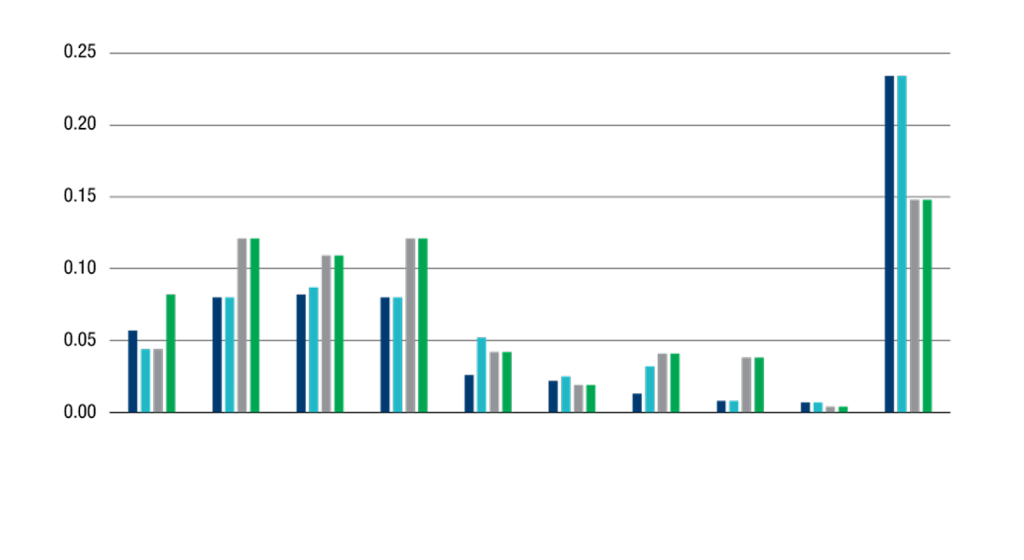
Case Study: Switchgear Procurement for Dubai Industrial Park
To illustrate the power of this framework, let’s look at a recent procurement case study UAE involving the sourcing of 11kV switchgear for a large industrial facility in Dubai.
The Contenders
- Bidder X: Lowest commercial price ($1.2M). Standard specs. Remote support.
- Bidder Y: Highest commercial price ($1.5M). Premium specs (high-end relays). Local service center. High IP rating.
- Bidder Z: Mid-range price ($1.35M). Good specs. Local agent.
The Evaluation
Under a traditional L1 evaluation, Bidder X wins immediately. However, the project applied the 100-point lifecycle framework.
- Climate Resilience: Bidder X failed to provide sand ingress certification (IP5X only). Bidder Y provided IP65 certification tested at a local lab. Bidder Y scored maximum points; Bidder X scored zero on this sub-criteria.
- TCO: Bidder X’s maintenance schedule required shutdown and busbar tightening every 2 years. Bidder Y offered a maintenance-free busbar system for 10 years. When the cost of downtime was factored in, Bidder X’s TCO skyrocketed.
- Outcome: Bidder Y, despite being $300k more expensive upfront, won the bid with the highest total score.
The Result (3 Years Later)
Performance data validates the decision. A neighboring facility that chose the cheaper specification (similar to Bidder X) has experienced two dust-induced flashovers. The facility equipped with Bidder Y’s switchgear has had zero unplanned downtime and has saved an estimated $120,000 in maintenance and outage costs in just 36 months.
The Contractual Safeguards: Performance Guarantees and Penalties
A bid evaluation framework is only as strong as the contract that enforces it. If a supplier wins based on guaranteed efficiency or capacity, those guarantees must be written into the PO.
Essential Clauses for GCC Procurement
- Performance Bond: A bank guarantee (typically 10% of contract value) held until the equipment passes Site Acceptance Testing (SAT) and demonstrates performance in actual summer conditions.
- Liquidated Damages (LDs) for Efficiency: If the factory acceptance test (FAT) reveals the transformer losses are higher than what was guaranteed in the bid (which helped them win the TCO evaluation), a penalty formula is applied to deduct the Net Present Value of those extra losses from the purchase price.
- Warranty Extensions: Given the harsh climate, standard 12-month warranties are insufficient. Best practice in the GCC is to demand 24 months from commissioning or 30 months from delivery, shifting the early-failure risk back to the manufacturer.
Implementation Roadmap: Rolling Out the Framework in Your Organization
Moving from price-based to value-based procurement is a cultural shift. It requires buy-in from Finance (who see the higher upfront cost) and Operations (who reap the long-term benefits).
Steps to Implementation
- Pilot Program: Don’t change everything at once. Select one critical category (e.g., MV Motors or Transformers) to pilot the Total Lifecycle Value framework.
- Cross-Functional Scoring Teams: Never let procurement score the technical section alone. Create a scoring committee involving the Lead Electrical Engineer, the Maintenance Manager, and the Procurement Officer.
- Training: Invest in bid evaluation training for your team. They need to understand how to read type test certificates, interpret derating curves, and calculate TCO.
Frequently Asked Questions (FAQ)
1. What is the difference between a Commercial Bid Evaluation (CBE) and a Technical Bid Evaluation (TBE)?
A TBE focuses purely on the equipment’s specification, quality, compliance with standards, and suitability for the environment. It does not look at price. The CBE focuses on the price, payment terms, and delivery schedules. In a best-practice framework, the TBE must be completed and approved before the commercial prices are opened to ensure an unbiased technical assessment.
2. How can we justify paying 20% more for a “premium” brand to our Finance department?
You justify it through Total Cost of Ownership (TCO) calculation. By presenting a spreadsheet that shows the capitalized cost of energy losses and maintenance over 20 years, you can often prove that the “cheaper” option will actually cost the company significantly more in the long run. Finance teams respond to data, not technical jargon.
3. Are local content requirements (like IKTVA or ICV) mandatory for private sector projects?
Not always mandatory for private projects, but they are increasingly becoming a requirement for any project that interfaces with government entities (like connecting to the SEC or DEWA grid) or for companies in the oil and gas supply chain. Furthermore, prioritizing local content mitigates Net zero risk management solutions, which is a best practice for any private sector project manager.
4. What is “Derating” and why is it critical in the GCC?
Derating is the practice of reducing the rated capacity of equipment when it operates in high temperatures. Equipment rated for 1000kVA at 40°C might only handle 850kVA at 50°C. If you don’t account for this during bid evaluation, you will unknowingly buy undersized equipment that will overheat and fail during the GCC summer.
5. Can we ask suppliers to extend their warranty to cover the extreme summer months?
Yes. It is standard practice in the GCC to request a warranty that covers at least two full summer cycles (24 months). This ensures that the equipment has been stress-tested by the environment while still under the manufacturer’s liability.
Conclusion: The Value of Certainty
In the demanding environment of the GCC, “cheap” is expensive. The initial price tag on a piece of electrical plant is merely the entry fee; the true cost is determined by how that equipment performs under the relentless sun, dust, and humidity of the region. By adopting a rigorous Technical Bid Evaluation framework that prioritizes climate resilience, local support, and energy efficiency, you are not just buying equipment; you are buying certainty.
You are securing the future uptime of your facility and protecting your organization from the hidden, multimillion-dollar costs of premature failure.
Ready to transform your procurement strategy?
Developing these frameworks requires deep technical knowledge and market insight. Elecwatts specializes in acting as the “Technical Arm” of your procurement team. From drafting robust specifications that filter out low-quality bidders to conducting independent technical bid evaluations and TCO modeling through our electrical engineering consultancy services, we ensure your capital is invested, not just spent.
Contact Elecwatts today to discuss how we can support your next major procurement cycle.