

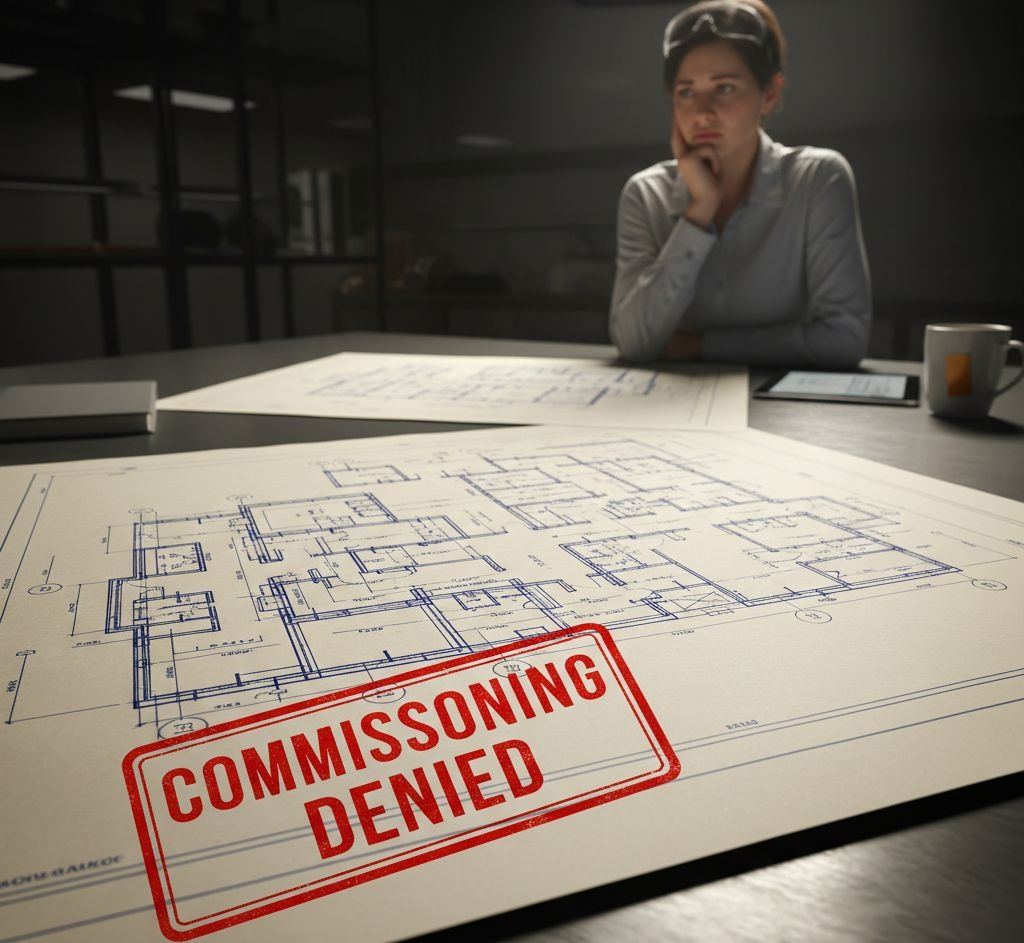
Imagine this scenario: your project is mechanically complete, deadlines have been met, and the finish line is in sight. But when you apply for the final connection, the utility company or local authority refuses to grant commissioning approval. Suddenly, your project is stalled, facing costly delays, mandatory redesigns, and significant budget overruns. This frustrating situation is often caused by hidden electrical design flaws not caught during the initial power systems analysis and planning stages.
At Elecwatts, we serve as the expert partner that identifies and resolves these critical issues long before construction begins, ensuring a smooth and predictable path to commissioning. Here are five of the most common hidden flaws we uncover in GCC projects.
Flaw #1: Underestimated Short-Circuit Current Ratings
The Problem: The GCC electrical grid is exceptionally robust, meaning the available fault currents during a short circuit can be extremely high. If equipment like circuit breakers, switchgear, and panelboards have an insufficient Interrupting Rating (IC) or withstand rating, they are not just non-compliant; they are a catastrophic safety risk.
The Consequence: An immediate refusal of the utility connection is guaranteed. Commissioning will be halted until all under-rated equipment is replaced at the project owner’s expense, leading to massive financial losses and schedule delays.
The Elecwatts Solution: Our power systems analysis and design approach ensures Short-Circuit Analysis is performed during the design phase to simulate worst-case fault conditions. This ensures that every piece of equipment specified has the correct rating to safely handle potential faults, satisfying all utility and safety requirements from the start.
Flaw #2: Inadequate Protection Coordination
The Problem: A facility experiences a minor fault in a single piece of equipment, like a small motor. Instead of the small, local breaker tripping to isolate the issue, the main incoming breaker for the entire facility trips. This “cascading failure” or lack of selectivity indicates a poorly coordinated protection scheme.
The Consequence: The project fails commissioning tests for system selectivity. Operationally, this flaw leads to widespread, unnecessary downtime as minor issues cause major outages, making it impossible to effectively troubleshoot faults.
The Elecwatts Solution: We conduct detailed Protection Coordination & Selectivity Studies as a core part of our analysis power system services. By modeling the time-current curves of all protective devices, we ensure the correct breaker trips at the right time, guaranteeing operational resilience and passing all commissioning requirements.
Explore Power System Analysis in Dubai at ElecwattsGCC.
Flaw #3: Ignoring Arc Flash Hazard Boundaries
The Problem: A design inadvertently places routine maintenance points, such as disconnect switches or control panels, within a high-risk “arc flash boundary.” This means operators performing standard tasks are exposed to the potential of a life-threatening arc flash event without adequate warning or protection.
The Consequence: This is a direct violation of GCC occupational health and safety (OHS) mandates. It will lead to an immediate shutdown order during a commissioning safety review and exposes the project owner to major liability.
The Elecwatts Solution: Our Arc Flash Hazard Analysis is integrated directly into the power system analysis and design review process. The results inform safe equipment layouts, specify the correct Personal Protective Equipment (PPE), and guide the implementation of mitigation systems, designing safety in from day one.

Flaw #4: Poor Grounding System Design for Desert Soil
The Problem: The sandy, dry, and highly resistive soil common in the GCC region makes achieving a low-impedance grounding grid a significant challenge. An improperly designed grounding system is a major safety hazard and can cause persistent operational problems.
The Consequence: The system will fail commissioning due to high touch and step voltage potential, which poses a serious safety risk. It can also lead to lightning protection system failure and create electrical “noise” that causes spurious trips and instability in sensitive control systems.
The Elecwatts Solution: Our Grounding System Analysis & Design begins with on-site soil resistivity testing. We use this data to engineer an effective, code-compliant grounding grid tailored to the specific local conditions, ensuring both safety and system stability.
Flaw #5: Harmonic Distortion from Unfiltered Non-Linear Loads
The Problem: Modern facilities are filled with non-linear loads like Variable Frequency Drives (VFDs), switch-mode power supplies (SMPS), and large-scale LED lighting systems. These devices inject harmonic “noise” back into the electrical system, which can overload neutral conductors, cause transformers to overheat, and degrade overall power quality.
The Consequence: The facility will face penalties from the utility for polluting the grid. It can also lead to premature and unexplained equipment failure and will fail to meet mandatory standards (like IEEE 519) for harmonic distortion levels required for commissioning.
The Elecwatts Solution: We perform a comprehensive Power Quality & Harmonic Analysis to predict the total harmonic distortion. Based on the results, we engineer and specify the correct mitigation, such as active or passive harmonic filters and K-rated transformers, to ensure a clean, efficient, and compliant power supply.
The Common Thread: The Need for Proactive Analysis
These five flaws are often invisible in a standard design review but are easily uncovered with advanced Power System Analysis and simulation. The crucial takeaway is that fixing these issues after construction is exponentially more expensive and disruptive than addressing them in the design phase. A proactive electrical design review backed by detailed engineering studies is the best investment you can make in your project’s success.
Also Read : A Project Manager’s Guide to Load Flow Studies for Power System Safety
Frequently Asked Questions (FAQ)
1. What is the biggest risk of skipping a short-circuit study in the GCC?
The biggest risk is specifying and installing millions of dollars worth of switchgear that cannot be legally connected to the utility grid, forcing a complete and costly replacement.
2. Why can’t we just use the manufacturer’s standard breaker settings for coordination?
Manufacturer settings are generic defaults. A proper coordination study customizes these settings based on your facility’s specific layout, loads, and transformer characteristics to ensure true selectivity and prevent nuisance tripping.
3. Is Arc Flash Analysis a legal requirement for commissioning?
Yes, compliance with local OHS regulations, which are aligned with international standards like NFPA 70E, is a mandatory part of the commissioning safety review. An arc flash study is essential to prove a safe operating environment.
4. Our contractor said the grounding design is “standard.” Is that good enough?
There is no “standard” grounding design that works for all GCC soil conditions. A design that is effective in coastal, moist soil will be completely inadequate and unsafe in dry, sandy inland soil without proper soil resistivity testing and custom engineering.
5. Can harmonics really damage a transformer?
Absolutely. Certain harmonic currents can circulate in a transformer’s windings, generating significant excess heat that the unit was not designed to handle. This leads to accelerated insulation breakdown and premature, costly failure.
Don’t Let a Hidden Flaw Derail Your Project Timeline and Budget.
Our team of experts uses state-of-the-art simulation software to perform a comprehensive Design Review & Power System Study, giving you the confidence that your project will commission smoothly and operate safely.