

In the high-pressure world of construction, particularly within the Gulf Cooperation Council (GCC), the difference between a project that is delivered on time and one that bleeds money in liquidated damages often comes down to a single, invisible factor: Interface Management.
Industry research and post-mortem analyses of major infrastructure projects in the region reveal a startling statistic: approximately 47% of all project delays are directly attributable to poor coordination between disciplines and contractors. It is not that the civil contractor cannot pour concrete, or that the electrical contractor cannot pull cable. The failure lies in the handshake, the point where one discipline ends and another begins.
Imagine a specialized substation in Riyadh where the civil team pours the transformer foundation plinths based on preliminary drawings. Three months later, the electrical team arrives with a transformer that requires a different bolt spacing. The result? Concrete breaking, rebar grafting, compromised structural integrity, and a four-week delay to energization.
This is the “Interface Trap.” In the era of GCC mega-projects, from the giga-projects of Saudi Vision 2030 to the intricate urban infrastructure of Dubai, reliance on ad-hoc coordination is a recipe for failure. Success requires a systematic, rigorous approach driven by Project Lead Engineering & Management and anchored by a dynamic tool: The Interface Matrix.
The GCC Fast-Track Reality: Compressed Schedules and Multiple Contractors
To understand why interface management is so critical in the Gulf, one must understand the unique pressures of the regional construction environment.
The “Fast-Track” Norm
In Europe or North America, detailed design is often 90% complete before ground is broken. in the GCC, the “Fast-Track” model is the standard. Design and construction often proceed in parallel. Foundations are poured while the steel structure is still being engineered; cable trenches are dug while the switchgear manufacturing drawings are still under review.
- The Risk: This overlap creates a fertile ground for interface clashes. If the electrical load list changes (common in fast-track projects), the HVAC team might need larger chillers, which might need larger concrete pads. If the civil team isn’t informed immediately via a robust interface management GCC protocol, they will build the wrong pads.
The Multi-Contractor Ecosystem
Major projects in the UAE, Qatar, and KSA rarely utilize a single self-performing contractor. The landscape is fragmented:
- Civil Works: Often a local Grade A contracting firm.
- MEP: A specialized international or regional subcontractor.
- Specialized Systems: Separate entities for Fire Alarm, BMS, and Security.
- Utility Providers: DEWA, SEC, Kahramaa, each with their own rigid interface requirements.
This fragmentation means that “coordination” is not just internal; it is contractual. A delay by the civil contractor in handing over a switchgear room directly impacts the electrical contractor’s ability to meet their milestones, leading to complex claims and counter-claims.
Defining Interfaces: Physical, Spatial, Temporal, and Informational
Effective management starts with definition. An interface is not just a physical connection; it is a point of interaction. In project lead engineering management, we categorize these into four distinct types to ensure nothing is missed.
1. Physical Interfaces
These are the hard connection points.
- Example: The anchor bolts where a motor sits on a concrete foundation. The cable lugs where a power cable connects to a switchboard.
- The Challenge: Tolerance. Civil works operate in centimeters; electrical works operate in millimeters. Bridging this gap requires precise specifications.
2. Spatial Interfaces
This involves sharing limited space without physical connection.
- Example: A cable tray running above a chilled water pipe.
- The Challenge: MEP coordination. If the pipe leaks, it damages the cable. If the tray is too low, it blocks maintenance access to the valve.
3. Temporal (Time-Based) Interfaces
These are sequence dependencies.
- Example: The substation room must be dust-free, air-conditioned, and secure (Civil/HVAC responsibility) before the switchgear can be delivered and installed (Electrical responsibility).
4. Informational Interfaces
The flow of data required for design.
- Example: The mechanical team needs the heat dissipation data (kW) from the electrical transformers to size the air conditioning for the substation.
The Interface Matrix Tool: A Living Document for Project Success
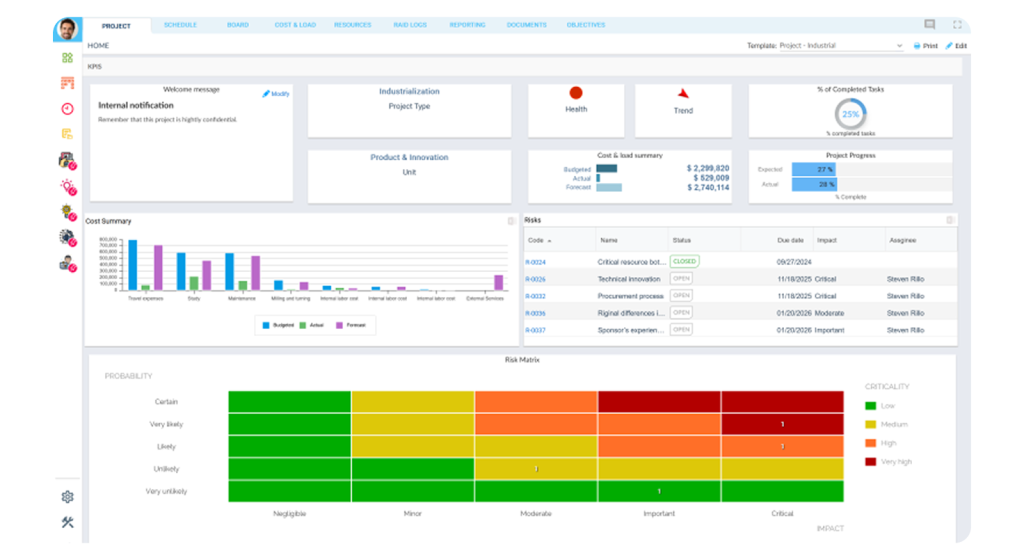
The solution to this complexity is the Interface Matrix. This is not a static spreadsheet filed away at the start of the project; it is a living, breathing control document that tracks every single point of interaction between disciplines.
Structure of the Matrix
A robust interface matrix template for GCC projects typically includes:
- Interface ID: Unique reference number (e.g., INT-CIV-ELE-001).
- System A (Provider): The entity providing the interface (e.g., Civil Contractor).
- System B (Receiver): The entity receiving the interface (e.g., Electrical Contractor).
- Interface Description: Detailed technical description (e.g., “150mm PVC Sleeve for MV Cable Entry”).
- Location: Grid line or room number.
- Required Date: When is this needed?
- Status: Open, Agreed, Verified, Closed.
- Drawing Reference: The specific approved shop drawing defining the detail.
Critical Interface 1: Civil to Electrical – Foundations, Slabs, and Penetrations
The interplay between civil and electrical trades is often the source of the earliest and most expensive clashes. In the GCC, where concrete pouring is often done at night to avoid heat, supervision of these civil-electrical interfaces is paramount.
Foundation Design Coordination
Electrical equipment is heavy and sensitive. Transformers, generators, and switchgear require foundations that are perfectly level and capable of handling dynamic loads (vibration).
- The Check: The Electrical Lead must verify that the Civil Structural Engineer has the Final Certified Dimension Print from the equipment manufacturer, not just the tender drawing.
- The Gap: Often, the cable entry points in the foundation (block-outs) do not align with the gland plates of the switchgear, forcing the installer to bend cables beyond their minimum bending radius, a code violation.
Penetrations and Fire Stopping
Every time a cable tray passes through a wall or floor, it creates a breach in the fire compartment.
- GCC Regulation: Civil defense authorities (e.g., Dubai Civil Defense, SASO) are extremely strict regarding fire stopping.
- The Interface: The civil contractor builds the wall; the electrical contractor runs the tray. Who fills the gap? This must be defined in the Interface Matrix. Usually, a specialized third-party fire-stop contractor is required to certify the penetration.
Critical Interface 2: Electrical to Mechanical – Power for Rotating Equipment
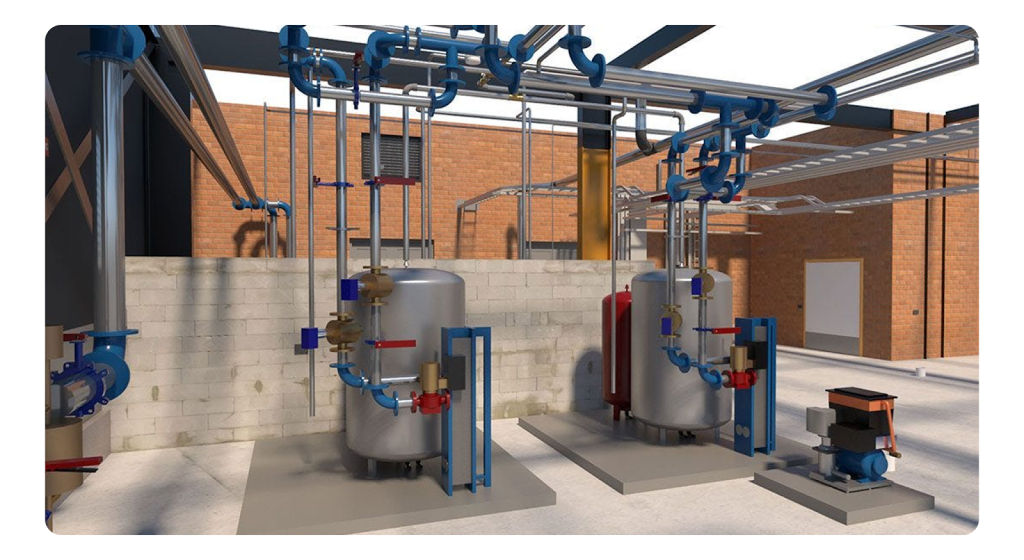
This interface defines the operational heart of any industrial facility. It is where electrical energy becomes mechanical work.
Motor Starting Analysis
In the Gulf, large pumps and fans for district cooling or desalination are common. These high-inertia loads require massive current inrushes to start.
- The Conflict: The mechanical engineer specifies a motor based on hydraulic load. The electrical engineer designs the starter (Soft Starter/VFD). If the electrical-mechanical coordination fails to account for the starting torque curve at high ambient temperatures (derating), the motor may stall or trip on overload during startup.
Vibration and Alignment
Electrical connections to rotating machinery must allow for vibration.
- The Interface: Hard-wiring a cable directly into a vibrating pump motor box will lead to fatigue failure of the copper lugs. The interface matrix must specify the use of flexible conduit and stranded cable for the final connection, a detail often missed in bulk material take-offs.
[Placement for Image 2]
Critical Interface 3: Electrical to HVAC – Load Profiles and Control Integration
In the GCC, HVAC is not just a comfort system; it is a survival system for the building and the equipment. It represents the single largest electrical load, often 60% of the total demand.
Load Diversity and Sizing
A common point of failure is the discrepancy between the “Connected Load” and the “Demand Load.”
- The Issue: Mechanical engineers often provide the “nameplate” rating of chillers. Electrical engineers sum these up. However, in reality, not all chillers run at 100% simultaneously.
- The Fix: HVAC electrical coordination requires a joint study of diversity factors. Overestimating leads to oversized transformers and wasted CAPEX. Underestimating leads to main breaker trips during peak summer heat.
BMS Integration
The Building Management System (BMS) is the brain of the facility. The interface between the electrical switchboard and the BMS is often purely informational but critical.
- The Protocol: Does the switchgear speak Modbus, BACnet, or IEC 61850? The Mechanical/BMS contractor needs to know exactly which data points (Voltage, Amps, Faults) are available to be mapped. This “Soft Interface” is frequently ignored until the commissioning stage, causing massive delays.
Technology Integration: BIM Coordination and Clash Detection
The days of light-table overlays are gone. Today, BIM coordination GCC standards (like those mandated by the Red Sea Global or Dubai Municipality) require sophisticated digital interface management.
The Power of Clash Detection
Tools like Autodesk Navisworks allow project teams to federate the Civil, Structural, Mechanical, and Electrical models into a single digital environment.
- Hard Clashes: Physical intersections (e.g., a duct running through a cable tray).
- Soft Clashes: Clearance violations (e.g., a pipe running within the 1-meter safety clearance zone of a high-voltage panel).
- Workflow: The Lead Engineer runs a clash report weekly. These clashes are assigned an ID and tracked in the Interface Matrix until resolved in the model, ensuring zero clashes on site.
Level of Development (LOD)
For this to work, the LOD must be defined.
- LOD 300: Approximate geometry. Good for spatial planning.
- LOD 400: Fabrication ready. Includes exact hangers, supports, and flanges.
Effective clash detection electrical requires at least LOD 350 to ensure that cable tray supports don’t clash with ductwork supports, a common site headache.
The Handoff Protocol: Systematic Transfer of Responsibility
An interface is a relay race. The baton must be passed securely. If the civil team finishes a room and leaves, and the electrical team enters two weeks later to find water leaks, who is responsible?
The IRE (Inspection Request) Process
Every handoff must be formalized.
- Pre-Handoff Inspection: Civil and Electrical leads walk the specific area (e.g., Substation Room).
- Snag List: Deficiencies (e.g., uneven floor, unpainted wall behind where panel will sit) are recorded.
- Correction: Civil contractor rectifies snags.
- Handoff Certificate: Both parties sign a “Transfer of Custody” document. From this moment, the Electrical contractor “owns” the room and is responsible for its security and cleanliness.
Energization Handoff
The ultimate handoff is Energization. This requires a “Permit to Energize” (PTE) system. The responsibility shifts from the construction team to the commissioning/operation team. This is a critical safety interface where Lock-Out/Tag-Out (LOTO) procedures are strictly enforced to prevent electrocution.
The Lead Engineer’s Role: Facilitator, Arbitrator, and Systems Integrator
In this complex web of interactions, the Project Lead Engineer is the spider in the center. They are not just a technical approver; they are a diplomat and a systems integrator.
Competencies for Success
- Technical Breadth: An electrical lead must understand enough civil engineering to question a foundation drawing and enough mechanical engineering to challenge a motor spec.
- Conflict Resolution: Interface disputes are inevitable. “It’s not in my scope” is the most common phrase on site. The Lead Engineer must arbitrate these Net zero risk management solutions by referencing the Interface Matrix and the Scope of Works, finding a technical solution that minimizes cost and delay.
- Communication: Running the weekly “Interface Meeting.” This is not a progress meeting; it is a specialized session dedicated solely to closing items on the Matrix.
Frequently Asked Questions (FAQ)
1. What is the difference between an Interface Matrix and a Coordination Drawing?
A Coordination Drawing (typically a Combined Services Drawing or CSD) is a visual representation of the physical layout of systems. The Interface Matrix is a management tool that tracks the status, responsibility, and timeline of the interaction. You need the Matrix to manage the production and approval of the Drawing.
2. How do we handle interfaces when contractors are on different schedules?
This is the hardest challenge in fast-track project management. The solution lies in “Freezing” interfaces. If the civil team needs to pour slabs before electrical design is 100%, the electrical team must issue “Frozen” loading data and penetration locations. Any changes after this freeze date become a variation order, but the civil work proceeds based on the frozen data to maintain schedule.
3. Which software is best for managing interfaces?
While Excel is common, modern projects use cloud-based platforms like Procore, Aconex, or BIM 360. These allow the Interface Matrix to be linked directly to the BIM model and RFIs, creating a seamless audit trail.
4. Who is responsible for the “Gap” between trades?
Ideally, the General Contractor (GC). However, in construction management contracts where trade contractors report directly to the client, the “Gap” is the client’s risk. This is why hiring a strong project integration management consultancy is crucial to act as the client’s representative and bridge these gaps.
5. What are the most common “forgotten” interfaces?
-
- Condensate Drains: HVAC units produce water; if no drain point is provided by plumbing, it creates a me
-
- Earthing: Civil contractors often forget to leave pigtails from the rebar for the electrical earthing grid.
-
- Access Hatches: Mechanical installs a valve above a plaster ceiling, but no access hatch is framed by the civil team.
-
- Condensate Drains: HVAC units produce water; if no drain point is provided by plumbing, it creates a me
Conclusion: Managing the “White Space”
In construction, the greatest risks lie not in the work itself, but in the “white space” between the scopes of work. It is in these gaps that misunderstandings fester, clashes occur, and schedules die. The Interface Matrix is the tool that colors in this white space, turning vague assumptions into clear, actionable, and trackable responsibilities.
For GCC project managers and lead engineers, mastery of interface management is not optional. It is the defining skill that separates a chaotic, delayed project from one that delivers on its fast-track promise. By implementing a systematic approach, defining physical, spatial, and informational handoffs, you protect your project from the 47% statistic.
Need expert coordination for your next complex project?
Interface management requires experience. Elecwatts provides specialized electrical design consultancy services designed for the multi-contractor reality of the Gulf. We act as the glue between your civil, mechanical, and electrical teams, using advanced BIM tools and rigorous interface matrices to ensure seamless handoffs from ground-breaking to energization.
Contact Elecwatts today to secure your project’s critical interfaces.