

Two petrochemical blending plants operate in the same industrial zone in Jubail, Saudi Arabia. They process similar volumes, employ similar numbers of staff, and generate comparable revenue. Yet, when their annual Property Damage and Business Interruption (PDBI) insurance renewals arrive, Plant A faces a premium of $450,000, while Plant B, seemingly identical, pays just $270,000.
This 40% discrepancy is not a negotiating error. It is a reflection of risk quality.
For many Facility Managers and CFOs, the calculation of insurance premiums remains a “Black Box”, an arbitrary figure handed down by underwriters. However, in the high-stakes world of Electric Insurance management in the GCC, premiums are calculated based on rigorous engineering parameters. Underwriters and risk engineers do not look at the facade of the building; they look at the resilience of the electrical backbone. They assign a “Risk Score” based on how likely the facility is to burn down, explode, or suffer a prolonged shutdown due to electrical failure.
Electrical risk quantification is the process of translating technical data, short circuit studies, thermography reports, maintenance logs, into a language of financial risk. For GCC industries operating in high-hazard environments, understanding these engineering parameters is the key to unlocking significant premium reductions and moving from a “Standard” to a “Highly Protected Risk” (HPR) classification.
The GCC Insurance Market: Unique Challenges and Regional Underwriting Practices
The insurance landscape in the Gulf is distinct from Europe or North America, driven by the sheer scale of energy assets and specific regional financial structures.
The Reinsurance Reality
While a local insurer (a “Cedant”) may issue the policy, the massive value of GCC industrial assets (often exceeding $1B) means the risk is ultimately carried by global reinsurers in London, Munich, or Zurich. These reinsurers demand technical transparency. They focus heavily on “Maximum Foreseeable Loss” (MFL), the worst-case scenario if all safety systems fail.
- Regional Implication: Technical submissions must meet international standards (NFPA, IEC) to satisfy these global underwriters.
Takaful and Shared Risk
Islamic insurance, or Takaful, is prevalent in Saudi Arabia and Malaysia. It operates on a model of shared responsibility and mutual guarantee.
- Transparency: Takaful operators require a higher degree of disclosure regarding asset health. Hiding a risk is not just a breach of contract; it contradicts the cooperative principle of the fund.
- Natural Catastrophe (NatCat): In the GCC, underwriters are increasingly sensitive to “NatCat” risks, specifically flash flooding in industrial wadis and dust-induced equipment failure, adjusting industrial risk underwriting models accordingly.
Parameter 1: Protection System Design and Selectivity Analysis
For an insurer, the nightmare scenario is not a short circuit; it is a short circuit that spreads.
The Cost of Business Interruption (BI)
In modern insurance policies, Business Interruption payouts often exceed the cost of replacing the damaged equipment. If a minor fault on a 400V sub-distribution board trips the main 11kV incomer because of poor coordination, the entire plant shuts down.
- The Engineering Link: Underwriters look for a current power systems analysis report focusing on Protection Coordination.
- The Premium Impact: A facility that can demonstrate “Selective Coordination”, where only the breaker closest to the fault trips, is viewed as a lower BI risk. If your study is outdated (>5 years) or non-existent, underwriters assume the worst-case shutdown scenario and price the protection system insurance impact accordingly.
Redundancy (N+1)
Does the facility have a redundant power path? If Transformer A fails, can Transformer B take the load immediately?
- Classification: “Single Points of Failure” attract premium loadings. Engineering designs that incorporate automatic transfer schemes (ATS) and N+1 redundancy directly lower the Probable Maximum Loss (PML) calculations.
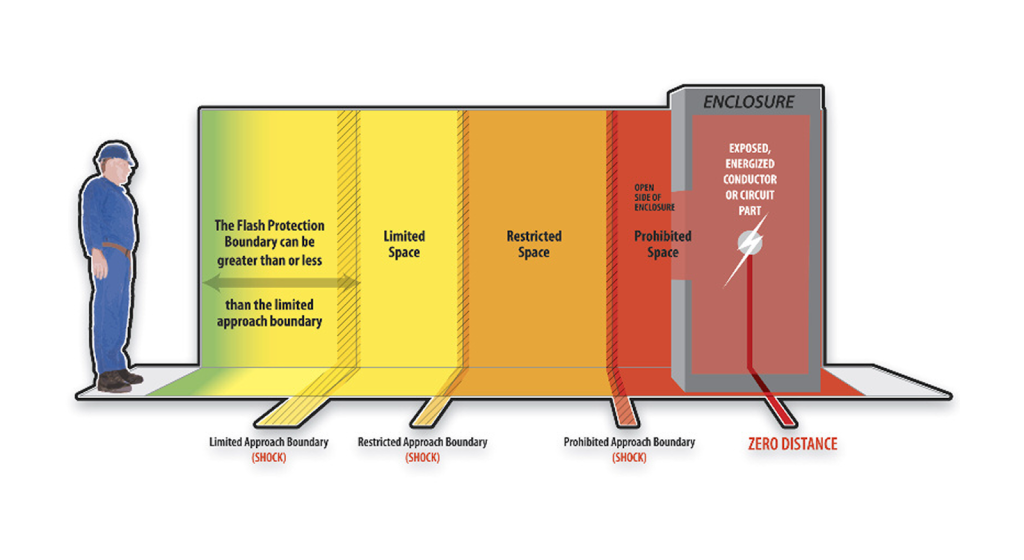
Parameter 2: Arc Flash Risk Assessment and Mitigation Measures
Arc flash is a leading cause of electrical injuries. From an insurance perspective, it represents a massive liability risk (Workers’ Compensation / Employer’s Liability).
Incident Energy and Liability
Insurers assess the “Incident Energy” levels calculated in your Arc Flash Study (NFPA 70E).
- High Risk (>40 cal/cm²): Equipment labeled “Dangerous” suggests that maintenance cannot be performed safely while energized. This implies either higher accident risk or forced shutdowns for simple tasks, both of which increase premiums.
- Mitigation: Retrofitting Arc Flash Reduction Maintenance Switches (ARMS) or active arc protection relays reduces the incident energy. Documenting these upgrades proves to the insurer that you are actively managing the arc flash insurance implications.
Case Study Impact
A manufacturing plant in the UAE reduced its liability premium by 15% simply by submitting a comprehensive Arc Flash Risk Assessment and evidence of a mandatory PPE program, moving them into a “Proactive Safety” classification.
Parameter 3: Fire Protection Systems Integration with Electrical Design
Electrical failures are the #1 cause of industrial fires. Consequently, the interface between electrical engineering and fire protection is a critical rating factor.
Detection vs. Suppression
- Standard Risk: Smoke detectors on the ceiling. By the time smoke reaches the ceiling, the switchgear is already destroyed.
- Improved Risk: In-cabinet suppression (e.g., aerosol generators).
- Highly Protected Risk (HPR): Early Warning Smoke Detection (VESDA) inside the electrical room or cabinet. This detects overheating wire insulation before a flame appears, allowing for intervention and preventing the loss entirely.
The Interlock Matrix
Insurers check the “Cause and Effect” matrix. If the fire alarm triggers, does the HVAC shut down to stop fanning the flames? Does the main breaker shunt trip?
- Documentation: Providing a certified “Sequence of Operation” test report assures the underwriter that the active fire protection electrical systems will function automatically to limit the loss.
Parameter 4: Environmental Controls – Temperature, Humidity, Dust Management
In the GCC, the environment is an active aggressor. Insurers know that heat and dust cause equipment to fail prematurely.
The “Managed Environment” Discount
Underwriters assess how well the electrical assets are isolated from the harsh climate.
- HVAC Redundancy: Is the electrical room air conditioning N+1? If the AC fails in August, internal temperatures can hit 60°C in hours, leading to failure.
- Positive Pressure: For environmental controls insurance scoring, having a positive pressure system (preventing dust ingress) distinguishes a well-run facility from a high-risk one.
- Monitoring: Remote monitoring of humidity and temperature with SCADA alerts suggests a “High Control” management style, warranting a better classification.
Parameter 5: Maintenance Programs and Documentation Standards
“Trust but Verify” is the insurer’s motto. The existence of a maintenance team is not enough; the rigor of the program determines the risk.
Reactive vs. Predictive
- Class C (High Risk): “Run to Failure” or reactive maintenance. No records.
- Class B (Standard Risk): Annual Preventive Maintenance (PM). Paper checklists.
- Class A (Preferred Risk): Predictive Maintenance (PdM) using Infrared (IR) and Ultrasound. Data is logged in a Computerized Maintenance Management System (CMMS).
The Evidence Trail
When an insurer’s risk engineer visits, they ask for the “Electrical Testing Records.”
- The Requirement: They expect to see trend analysis (e.g., “Transformer oil acidity has increased by 5% over 3 years”).
- The Payoff: Demonstrating a digitized, predictive maintenance program insurance strategy proves that asset health is being managed proactively, justifying a reduction in the “operational risk” component of the premium.
Parameter 6: The Engineering Risk Scorecard: Translating Technical Parameters to Risk Classes
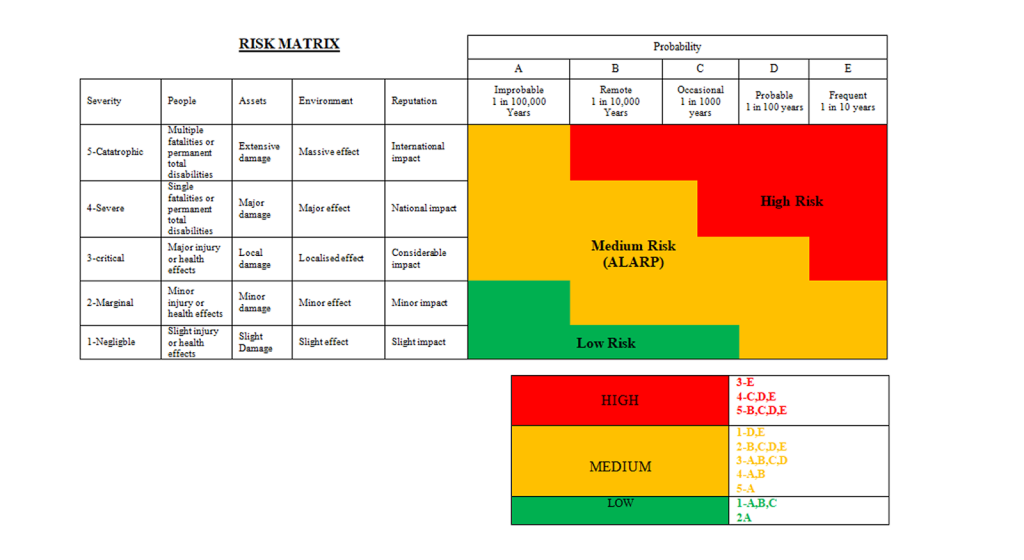
Insurers use internal scorecards to aggregate these parameters into a single “Risk Grade.” Understanding this scorecard allows you to self-assess.
The Weighted Calculation
While proprietary models vary, a typical engineering risk scorecard for GCC industry looks like this:
- Protection & Selectivity: 25% (Impacts BI magnitude)
- Maintenance & Inspection: 25% (Impacts failure probability)
- Physical Protection (Fire/Env): 20% (Impacts loss severity)
- Asset Age & Condition: 15% (Impacts replacement cost)
- Management & Training: 15% (Human element)
Sector Specifics
- Petrochemical: Heavier weighting on Explosion Proof (Ex) equipment maintenance and Hazardous Area Classification.
- Data Centers: Heavier weighting on redundancy (Tier rating) and cooling reliability.
Parameter 7: The Premium Negotiation Toolkit: Engineering Evidence That Lowers Costs
When renewal time comes, do not just send the standard forms. Arm your broker with an “Engineering Risk Defense” package.
The Technical Submission
Instead of letting the underwriter guess your risk profile (which usually leads to conservative, high pricing), provide:
- Executive Summary of Electrical Health: “98% of assets are in Condition 1 or 2.”
- Recent Study Verifications: “Short Circuit study updated Jan 2024; all breakers rated correctly.”
- Thermography Close-Out Report: “50 hotspots identified, 50 rectified within 14 days.”
- Independent Audit Report: A third-party validation carries immense weight.
Benchmarking
Use industry data to argue your case. “Our transformer failure rate is 0.5%, compared to the regional industry average of 2.1%.” This statistical evidence makes it difficult for an underwriter to justify a standard market rate for your superior risk profile.
Parameter 8: Continuous Improvement: Using Insurance Feedback to Enhance Electrical Safety
The relationship with your insurer should be a feedback loop. After a site survey, the risk engineer will issue “Risk Recommendations” (e.g., “Install fire stops in cable trenches”).
The Implementation Tracker
Treat these recommendations as free consulting.
- Track & Close: Create a register of these recommendations. Closing them out demonstrates a culture of safety.
- Loss Run Analysis: If you have claims, analyze them deeply. Was it a component failure or a system design failure? Re-engineering to prevent recurrence (e.g., installing surge arresters after a lightning claim) prevents the premium from spiraling after a loss.
Frequently Asked Questions (FAQ)
1. Does having a generic “Electrical Safety Certificate” lower my premium?
Rarely. Insurers know that generic certificates can be obtained easily. They value specific, data-backed engineering reports (Thermography, Protection Coordination, Oil Analysis) that prove the ongoing health of the system, rather than a one-time certificate.
2. My facility is old. Can I still get a “Good” insurance classification?
Yes. Age is less important than condition. An old plant with a rigorous, documented predictive maintenance program and modernized protection relays can often secure better rates than a new plant with poor maintenance practices.
3. Why do insurers care so much about Business Interruption (BI)?
In modern industry, the value of the product often far exceeds the value of the equipment. If a $50,000 switchboard fire stops production of $2M worth of chemicals per day, the BI claim dwarfs the property claim. Engineering that prevents downtime (redundancy, selectivity) is the most effective way to lower BI premiums.
4. What is a “Maximum Foreseeable Loss” (MFL) study?
This is a study required by reinsurers for large sites. It calculates the financial impact of the worst possible disaster (e.g., “What if the main substation burns down completely and fire water fails?”). Engineering controls like firewalls and blast blast-resistant control rooms limit this MFL, directly reducing the reinsurance cost.
5. Can Elecwatts help with insurance negotiations?
We do not sell insurance, but we provide the electrical risk assessment services that enable you to negotiate. We conduct the audits, perform the studies, and create the “Risk Defense” technical packages that your broker uses to secure better terms from underwriters.
Conclusion: Engineering Your Own Premium
Insurance is not a fixed tax; it is a variable cost that responds to engineering quality. The gap between a high premium and a low one is filled with data, maintenance logs, and design studies.
For GCC industrial leaders, the path to lower premiums lies in quantifying electrical risk. By viewing your electrical infrastructure through the eyes of an underwriter, focusing on protection, fire safety, and predictive maintenance, you do more than just save money on insurance. You build a facility that is inherently safer, more reliable, and more profitable.
Stop paying for assumed risk.
Prove your facility’s true quality. Elecwatts works with industrial clients across the GCC to conduct insurance-grade electrical audits and risk assessments. We help you identify the engineering gaps that are driving up your premiums and provide the technical documentation needed to close them.
Contact Elecwatts today to engineer a lower risk profile for your business.