

In the high-stakes environment of Middle Eastern real estate, infrastructure, and heavy industrial developments, the margin for engineering error is non-existent. Selecting a qualified electrical engineering consultant GCC is the single most critical decision a developer or project manager will make. If you choose the wrong engineering partner, your project risks devastating utility rejections, massive cost overruns, and delayed facility energization.
It is crucial to vet candidates thoroughly before signing a contract to ensure your investment is safe. Here is how to hire electrical design firm UAE and Gulf partners successfully by asking the ten critical questions that protect your bottom line.
Question 1: What is Your Utility Approval Track Record?
Navigating the bureaucratic gateways of Gulf utility providers like DEWA (Dubai), SEC (Saudi Arabia), or KAHRAMAA (Qatar) is fundamentally different from securing permits under Western utility frameworks. In the GCC, utility approvals are heavily gated by strict local grid codes, standardized equipment lists, and localized design clearances.
Proving Regional Competency
A generic international design firm without local boots on the ground will struggle to navigate these systems. You must ask: “Can you provide specific, recent examples of No Objection Certificates (NOCs) and design approvals your firm has secured in the exact Emirate or municipality of our project?”
Partnering with a seasoned DEWA approval consultant or an engineer with extensive SEC utility NOC experience ensures your designs are built to pass regulatory reviews on the first attempt, preventing months of deadlocked negotiations.
Question 2: How Do You Handle Value Engineering Without Compromising Safety?
Every developer wants to optimize their capital expenditure (CAPEX). However, in electrical engineering, poorly executed “value engineering” is the primary precursor to catastrophic cable meltdowns, breaker failures, and compromised life safety systems.
Squeezing Costs Safely
Ask candidates how their electrical design services optimize physical layout parameters without cutting safety corners. Meticulous electrical value engineering GCC does not mean swapping out premium cables for cheaper imports. Instead, it involves calculating precise thermal derating factors, optimizing cable routing paths, and strategically placing substations to achieve a highly CAPEX optimized electrical design that saves millions in raw copper and civil structural costs while remaining fully code-compliant.
Question 3: What Software Ecosystem Do You Use?
In the modern engineering landscape, relying on flat, 2D drafting methods is an operational liability. Today’s massive, multi-tiered commercial towers and complex industrial plants require highly sophisticated digital environments to model power flows and physically coordinate utilities.
The Digital Twin Benchmark
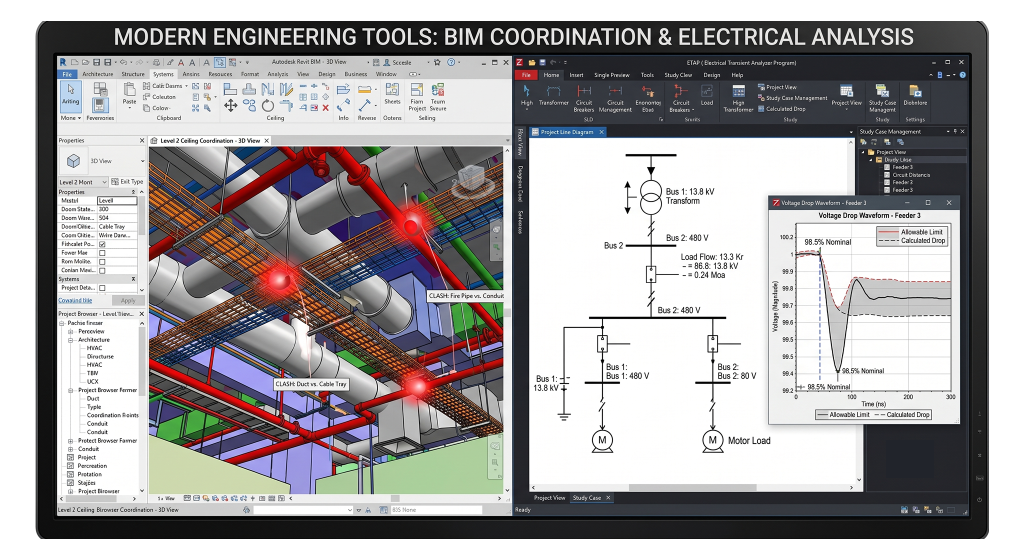
Inquire if the firm is fully native in 3D Building Information Modeling (BIM) using Revit LOD 400 or LOD 500. A qualified BIM electrical consultant uses 3D space to run automated “clash detection” algorithms, ensuring that electrical cable trays do not physically collide with massive HVAC ducts or plumbing lines.
Furthermore, verify that their engineers are fluent in specialized simulation software like ETAP or DIgSILENT. Running dynamic ETAP power studies UAE style allows engineers to mathematically model the electrical grid, simulating how the system will react to prospective short circuits, motor starting surges, and voltage drops long before any equipment is physically procured.
Question 4: Do You Have In-House Power Systems Analysis Experts?
Many mid-sized engineering firms attempt to win projects by presenting a complete suite of services on paper, only to quietly outsource critical analytical studies behind the scenes.
The Risk of Outsourcing
Ask directly: “Do you have dedicated, in-house power analysis experts, or do you outsource your short circuit, protection coordination, and harmonic studies to third parties?”
Having a dedicated, in-house electrical fault study consultant is a massive advantage. It means that power system simulations are run in parallel with the baseline design, ensuring that switchgear ratings, transformer sizes, and relay settings are mathematically validated from day one, rather than failing at the final utility review gate.
Question 5: How Do You Manage Supply Chain and Procurement Specs?
The global electrical supply chain is plagued by severe lead-time constraints. Highly customized, medium-voltage switchgear, massive step-up transformers, and specialized variable frequency drives can command manufacturing backlogs of 12 to 18 months.
Tailoring to Regional Realities
Ask how the consultant manages their electrical procurement specifications to align with active supply chain timelines. An experienced consultant will not specify exotic, long-lead equipment that halts your construction schedule.
Furthermore, they must strictly cross-reference all material schedules against the local utility’s GCC approved vendor list (AVL). Specifying a non-AVL transformer or breaker because it is cheaper or readily available is a critical failure that guarantees the utility will flatly refuse to install your meter or energize your facility.
Question 6: What is Your Approach to Net-Zero and Renewable Integration?
The Gulf region is undergoing an unprecedented transition toward sustainable construction, governed by green building codes like Dubai’s Al Sa’fat, Abu Dhabi’s Estidama, and Saudi Arabia’s Mostadam rating systems.
Engineering for Sustainability
Vetting your consultant requires asking: “How do you integrate renewable energy and net-zero strategies into your baseline layouts?”
A leading net zero electrical design consultant does not treat solar PV or electric vehicle (EV) charging stations as separate, bolted-on additions. A qualified sustainable consultant GCC specialist designs the main switchboards, load calculations, and transformer cooling systems on Day 1 to natively accommodate bidirectional power flows, harmonic filtering for EV chargers, and smart metering integration, ensuring long-term operational viability.
Question 7: How Do You Mitigate Project and Liability Risks?
An electrical failure in a high-density commercial tower or a petrochemical refinery is not merely a maintenance issue; it is a violent, high-stakes emergency that can result in lethal arc flashes, catastrophic fires, and millions of dollars in lost operational uptime.
Insulating the Investment
Ensure your candidate has a robust approach to risk. Ask if they integrate Net zero risk management solutions to insulate your project from liability.
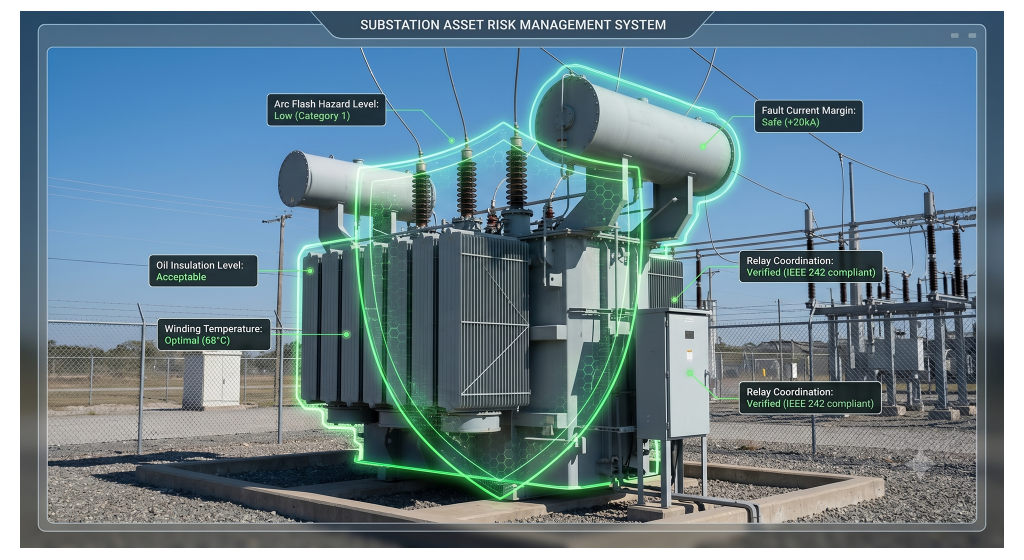
Implementing advanced engineering risk management methodologies—such as pre-designing automated arc-flash mitigation relays, specifying fast-clearing circuit breakers, and carrying comprehensive Professional Indemnity (PI) insurance—minimizes the electrical liability risk GCC developers face, ensuring the facility is highly insurable and built to survive the worst-case scenario.
Question 8 & 9: Site Supervision and Dispute Resolution
An outstanding design on paper is meaningless if the physical installation in the field is executed poorly by the construction contractors.
Bridging the Gap
Ask: “What is your approach to electrical site supervision?” A qualified consultant must provide active, certified site inspectors who physically walk the site to verify earthing pit resistance values, inspect the torque testing of busbar joints, and ensure cable tray fire-stopping seals are applied correctly.
Furthermore, ask how they manage the inevitable interface disputes between overlapping mechanical, electrical, and plumbing (MEP) contractors. A premier consultant uses a highly detailed MEP Interface Matrix to resolve boundaries (e.g., who wires the VFD for the HVAC chillers?), delivering rapid, objective MEP dispute resolution that keeps the construction schedule moving forward.
Frequently Asked Questions (FAQ)
1. Why is a local utility approval track record so important for a GCC electrical consultant?
GCC utilities (like DEWA, SEC, and KAHRAMAA) operate strictly independent, highly policed distribution networks. They enforce specific equipment approvals, clearance dimensions, and grid-code parameters that are unique to the Middle East. An international firm lacking local approval experience will frequently design non-compliant systems, leading to rejected submittals and massive energization delays.
2. What is the benefit of a BIM-native electrical consultant?
A BIM-native consultant models the entire electrical system in 3D. This allows for automated “clash detection” during the design phase. It ensures that thick metallic cable trays do not physically collide with HVAC ducts, concrete columns, or drainage pipes in the ceiling, completely eliminating expensive, time-consuming structural modifications during construction.
3. How does in-house power system analysis protect my project budget?
Outsourcing critical analytical studies (like short circuit and harmonic analysis) often results in a disconnected design workflow. In-house power analysis experts run simulations continuously as the design develops, ensuring that circuit breakers, switchgear, and transformers are sized accurately for real-world fault conditions on Day 1, saving money on equipment over-specification.
4. What is the “Approved Vendor List” (AVL) and why is it critical?
Every major utility in the GCC maintains an Approved Vendor List (AVL) specifying the exact manufacturers and models of transformers, cables, and switchgear permitted to connect to their grid. If your consultant specifies non-AVL equipment, the utility will refuse to inspect, meter, or energize your facility, forcing you to completely replace the installed equipment at your own expense.
5. What is “value engineering” in electrical design?
Meticulous value engineering is the process of optimizing the electrical system to reduce capital expenditure (CAPEX) without sacrificing safety, compliance, or operational reliability. It involves using advanced software to find the most efficient cable routes, balancing phases to reduce cable sizes, and optimizing substation locations to minimize copper costs.
Are You a Strategic Partner? (Question 10)
The final, defining question you must ask is about long-term vision: “Do you view your firm as a drafting office that merely produces drawings to pass an inspection, or do you act as a strategic partner that engineers for the entire lifecycle of our asset?”
Selecting the top electrical engineering firm GCC market sectors trust requires finding an engineering partner who understands that their work forms the physical, operational backbone of your business. Your consultant must design systems that not only secure utility power today but remain highly efficient, flexible, and resilient for decades to come.
Ready to partner with a team that checks every box?
Do not compromise your project’s schedule, budget, or safety on unverified designs. Partner with our electrical engineering consulting firm to secure unmatched expertise in the Middle East market. Elecwatts functions as your strategic electrical partner, delivering the rigorous technical due diligence, advanced system simulations, and localized regulatory compliance required to power your next development flawlessly.
Contact Elecwatts today to discuss your project’s engineering requirements.