

As Saudi Arabia accelerates toward the milestones of Vision 2030, the Kingdom’s industrial sector is undergoing a dual transformation: rapid expansion and a mandatory shift toward energy sustainability. For industrial cities, factories, and heavy processing plants, the reliance on the traditional grid is being challenged by the need for higher reliability, lower carbon footprints, and better cost control. The concept of the microgrid—once seen as a futuristic luxury—has matured into a strategic necessity. But the central question for asset owners remains: Does the business case for a microgrid Saudi industrial city ROI 2026 finally stack up? This analysis cuts through the hype to provide a data-driven look at the costs, savings, and viability factors for your operation.
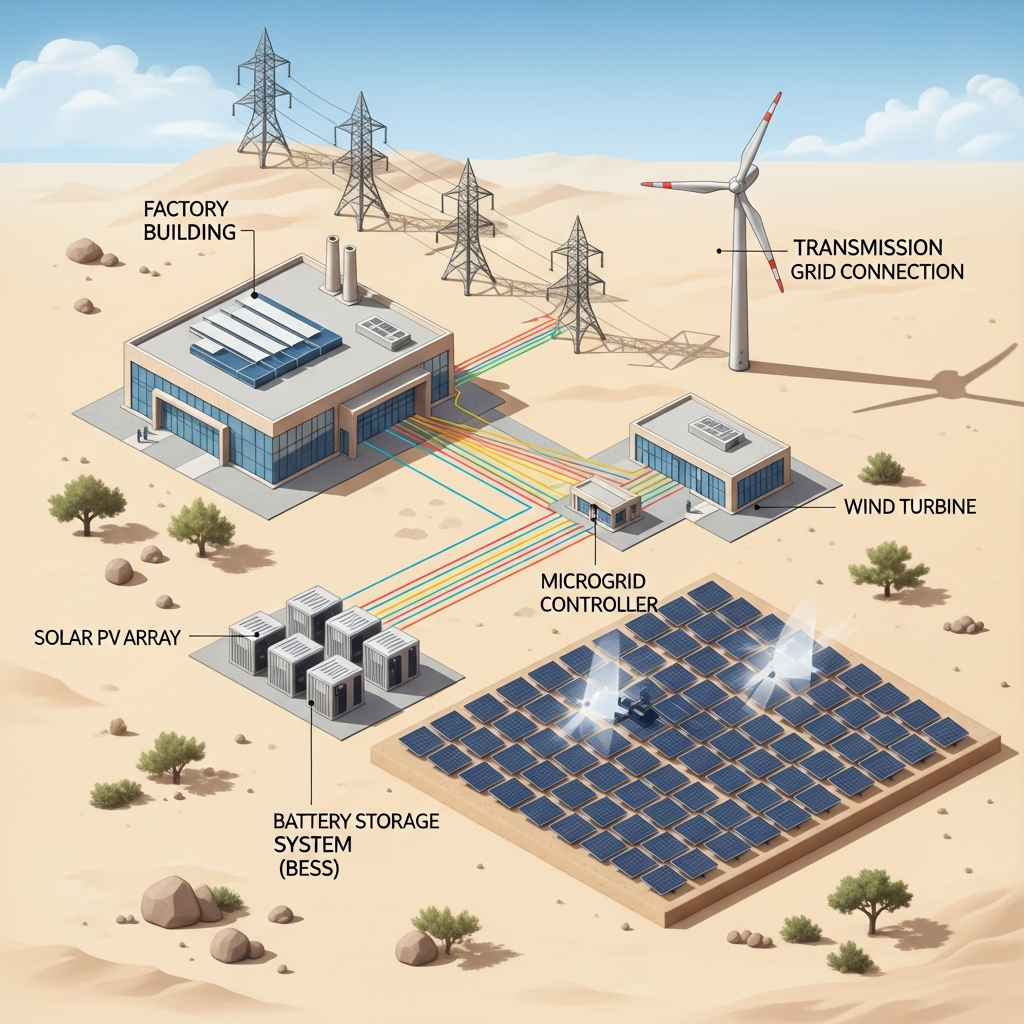
What is an Industrial Microgrid? Beyond Just Backup Power
There is a common misconception that a microgrid is simply a diesel generator sitting behind a transfer switch. A modern industrial microgrid definition is far more sophisticated. It is an integrated, smart energy system that combines local generation (usually renewable), energy storage, and intelligent controls.
Crucially, it possesses grid islanding capability—the ability to disconnect from the main utility grid and operate independently during an outage, ensuring seamless continuity for critical processes. Beyond emergencies, it actively manages power quality and costs 24/7, optimizing when to buy power from the grid, when to store it, and when to consume self-generated energy.
Learn more about how we design these systems at our Smart Grid Technical Advisory service page.
4 Key Viability Factors for Saudi Arabia in 2026
Determining if a microgrid is right for your facility depends on four specific variables within the current KSA market landscape.
1. Your Load Profile & Energy Cost Structure
The economic engine of a microgrid is often “arbitrage.” By analyzing your facility’s energy consumption patterns alongside Saudi Arabia’s industrial tariffs, a microgrid can be programmed to discharge battery power during peak pricing hours or to shave demand spikes that trigger high capacity charges. Peak shaving in Saudi Arabia is becoming increasingly valuable as utility structures evolve to reflect true cost-of-service.
2. Renewable Resource Potential (Solar, Wind)
Saudi Arabia boasts some of the highest solar irradiance levels in the world. For a microgrid to deliver a strong ROI, the “fuel” needs to be cheap. Integrating large-scale solar PV for industrial microgrids provides electricity at a Levelized Cost of Energy (LCOE) that is often competitive with, or lower than, industrial grid tariffs, especially when you factor in the elimination of fuel costs for backup diesel generators.
3. Regulatory Landscape & Grid Support
The regulatory environment in 2026 is more conducive to distributed generation than ever before. With bodies like the Water & Electricity Regulatory Authority (WERA) establishing clearer frameworks for renewable integration KSA, opportunities are emerging. We are also monitoring the potential for energy wheeling in Saudi Arabia, which could eventually allow industrial zones to sell excess microgrid capacity back to the grid or to neighboring facilities, turning a cost center into a revenue stream.
4. Criticality of Operations
For certain industries—pharmaceuticals, petrochemicals, data centers, and advanced manufacturing—the cost of power is secondary to the cost of no power. If a momentary voltage sag ruins a production batch or damages equipment, the financial loss can be millions of Riyals. In these cases, the microgrid provides critical power supply assurance and business continuity energy security that standard grid connections cannot match.
Building the 2026 ROI Model: A Simplified Breakdown
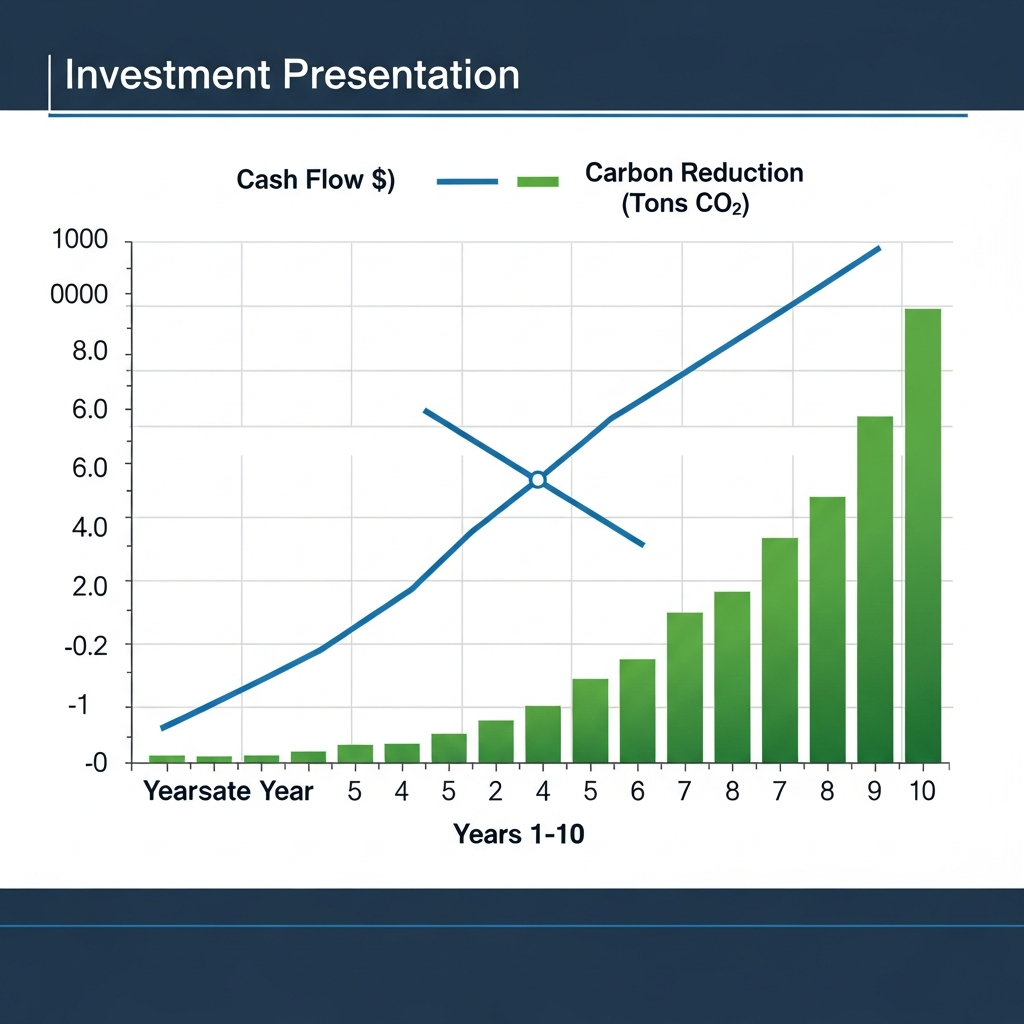
Calculating the microgrid return on investment requires balancing the upfront Capital Expenditure (CAPEX) against the long-term Operational Expenditure (OPEX) savings and revenue. While every project needs a custom study, the general model looks like this:
| Cost Side (CAPEX & OPEX) | Savings & Revenue Side |
| Solar PV Array & Inverters: The primary generation source. | Energy Bill Savings: Reduced kWh consumption from the grid and lower peak demand charges. |
| Battery Energy Storage (BESS): For stability and time-shifting energy. | Avoided Downtime Losses: The monetary value of continuous, uninterrupted production. |
| Microgrid Controller & Switchgear: The “brain” of the system. | Revenue from Grid Services: Potential income from frequency regulation (as markets open). |
| Installation & Engineering: Design, civil works, and commissioning. | Sustainability Value: Meeting corporate carbon goals and avoiding potential future carbon taxes. |
| Total Estimated CAPEX: Variable based on MW size and storage duration. | Annual Operational Savings: Often covers debt service and O&M costs. |
The Implementation Pathway: From Feasibility to Operation
Deploying a microgrid is a major infrastructure project. To manage risk and capital, we recommend a staged approach.
Phase 1: Technical & Financial Feasibility Study
This is the most critical step. It involves detailed load profiling, resource assessment, technology selection, and building a rigorous microgrid feasibility study model. This dictates the “Go/No-Go” decision.
Phase 2: Design & Regulatory Approval
Once viability is confirmed, we move to detailed engineering, equipment specification, and navigating the complex utility interconnection agreements with local providers.
Phase 3: Procurement, Construction & Commissioning
The execution phase involves managing EPC contractors and culminating in rigorous testing, specifically validating the system’s ability to seamlessly island and resynchronize with the grid.
Phase 4: Long-Term Operations & Maintenance (O&M)
A microgrid is a living asset. Expert microgrid O&M in Saudi Arabia is essential to ensure the battery health is preserved and the control algorithms remain optimized to deliver the projected ROI over a 15-20 year lifespan.
Frequently Asked Questions (FAQs)
Q1: What is a typical payback period for an industrial microgrid in Saudi Arabia today?
With current technology costs and the high solar potential in the Kingdom, well-designed systems can target payback periods of 5-8 years. This ROI improves significantly if the financial value of “avoided downtime” is factored into the model or if the facility faces high peak demand charges.
Q2: Can we start small and expand the microgrid later?
Absolutely. A modular approach is highly recommended for many industrial cities. You can begin with a solar PV setup and a central controller to reduce bills, and then add BESS for grid islanding capability in a later phase. The key is ensuring the initial master plan and controller infrastructure are scalable.
Q3: How do we manage the complexity of operating a microgrid?
This is a common concern. Modern Microgrid Energy Management Systems (MEMS) use advanced AI algorithms for autonomous, optimal operation—you don’t need a team of engineers watching it 24/7. However, partnering with an expert engineering firm for remote monitoring and support is crucial for peak performance.
Q4: Does a microgrid mean we disconnect from the national grid?
No. A grid-connected microgrid is the standard model for industrial zones. You remain connected to the national utility to benefit from the grid as a reliable backup and for stability, while the microgrid optimizes your on-site energy use. The ability to island is used only during grid outages or for specific economic optimization strategies.
Conclusion
The viability of industrial microgrids in Saudi Arabia is no longer just a technical conversation—it is a compelling economic one. With the maturation of technology in 2026 and the Kingdom’s push for efficiency, the question for industrial leaders has shifted from “if” we should build a microgrid, to “how” we can integrate one to secure our competitive advantage.
Determining the precise viability and ROI for your specific facility requires a detailed feasibility study. Our engineering team specializes in building Techno-Economic Models for industrial microgrids across the GCC.
Contact us to start your discovery phase or explore ourClimate & Renewable Energy Finance services to understand the economic modeling behind these assets.