

In 2026, the construction industry faces a stark reality: what began as a temporary post-pandemic supply chain disruption has evolved into a structural constraint. The “just-in-time” delivery model for critical electrical infrastructure is effectively dead. Driven by the global semiconductor squeeze, copper price volatility, and shipping bottlenecks, lead times for major Tier-1 switchgear brands are still stretching to 18+ months.
For Project Managers and Procurement Directors in the GCC, this creates an agonizing dilemma: Do you accept a project delay due to switchgear availability that could cost millions in liquidated damages, or do you venture into the landscape of alternative suppliers? The answer lies in the latter, but only if executed with a rigorous strategy. This guide provides the framework to confidently source switchgear alternative brands GCC 2026 without compromising on quality or safety.

Beyond the Big Names: Why the Market Has Shifted
The electrical equipment supply chain crisis has catalyzed a permanent shift in the market. While the “Big 4” legacy brands remain dominant, their inability to meet demand has opened the door for agile competitors. Tier-2 and Tier-3 manufacturers from Europe and Asia have invested heavily in R&D, third-party certification, and local GCC support infrastructure to fill the gap. These are no longer “cheap knock-offs”; many are viable, high-quality engineering partners capable of saving your project’s schedule.
Need help qualifying a new vendor? Explore our Electrical Plant Procurement services.
The 5-Point Evaluation Framework for Any Alternative Brand
To de-risk the switch, you cannot rely on a catalog. You need a rigorous, non-negotiable how to evaluate switchgear supplier checklist.
1. Certification & Testing Compliance
Never compromise here. Mandate full third-party type test certification (e.g., IEC 61439 importance, IEC 62271) from reputable, internationally recognized laboratories like KEMA, ASTA, or CESI. Ask for the full test reports, not just the certificate, and verify the dates.
2. Regional Support & Spare Parts Availability
A switchgear panel is a 25-year asset. Does the manufacturer have a technical office, a spare parts depot, and trained service engineers physically located within the GCC? Sourcing from a factory with no local footprint is a recipe for operational disaster.
3. Technical Documentation & Design Software
Evaluate the quality of their engineering. Do they provide detailed CAD files, BIM models, and comprehensive O&M manuals? Poor documentation is often a proxy for poor quality control and will cause headaches for your design consultants.
4. Material Quality & Key Component Sourcing
Investigate the “Bill of Materials” (BOM). Are the critical internal components—vacuum circuit breakers, contactors, protection relays, and PLCs—sourced from reputable sub-suppliers, or are they obscure, proprietary copies? Reliability lives in these components.
5. Reference Projects & Track Record
Demand a list of GCC-specific reference projects of similar scale and complexity. Do not just accept the list; call the consultants or facility managers involved. Ask about commissioning issues and after-sales support responsiveness.
Spotlight on Viable Alternative Tiers for the GCC Market
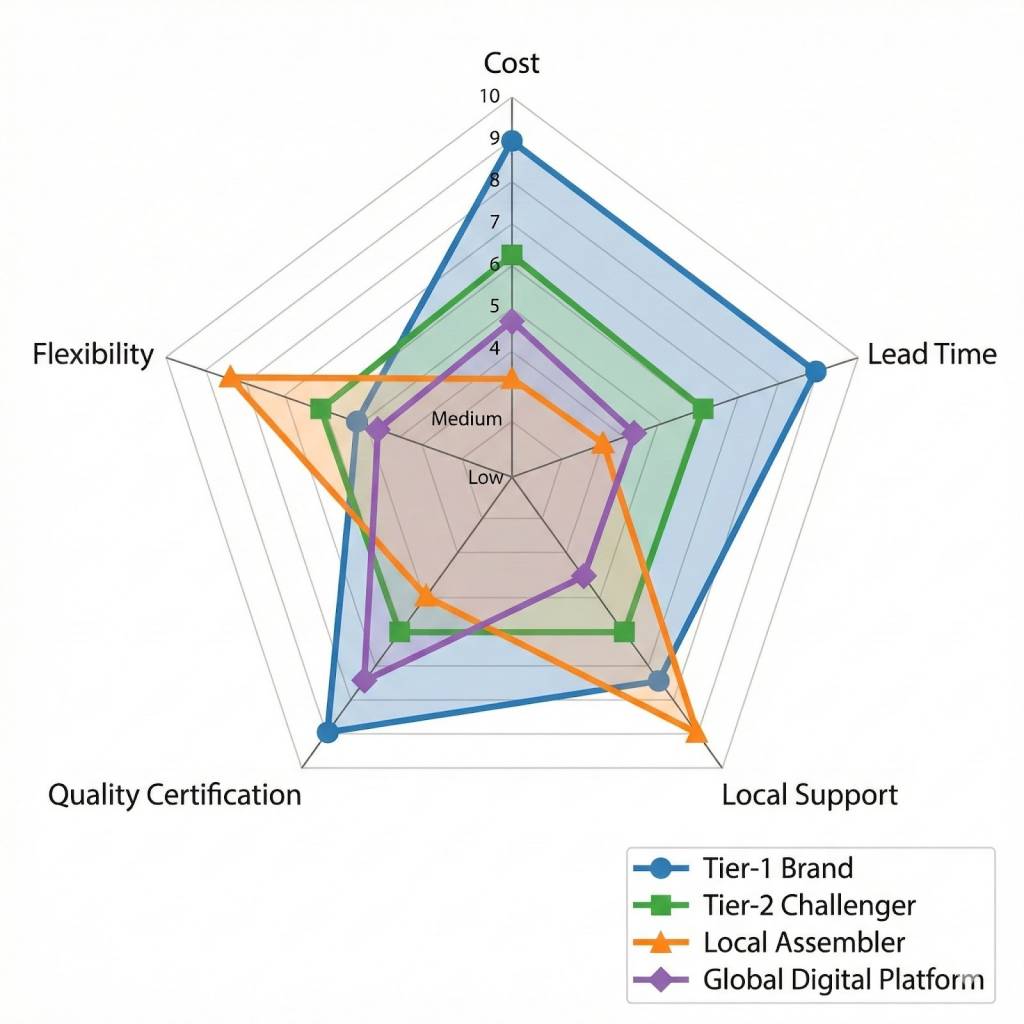
When looking for global tier 2 electrical brands, options generally fall into three categories:
Established “Global Tier-2” Brands
These are manufacturers well-known in specific regions (e.g., Southern Europe, East Asia, or Turkey) that have recently expanded their GCC presence. They often offer the best balance of price, proven quality, and significantly shorter lead times (typically 6-9 months).
“Specialist” or “Value-Engineered” Brands
These manufacturers focus on specific voltages or applications, such as compact Ring Main Units (RMU) for distribution or specialized combiner panels for solar farms. While they may not offer a full range, they can be excellent solutions if their niche aligns perfectly with your project scope.
The “Local Assembly” Option
This involves locally assembled switchgear UAE or KSA solutions, where a local partner assembles “kits” from a major global brand in a facility like JAFZA or Dammam. This hybrid approach often improves lead times significantly and allows for custom configuration flexibility while retaining the core technology of a major brand.
The Strategic Procurement Playbook: Mitigating Risk
Implementing a switchgear procurement strategy involving new vendors requires active risk management.
1. Early Engagement & Technical Clarifications
Engage potential alternative suppliers during the design development stage, not at the tender stage. Conduct joint technical workshops to ensure their specs align with your project requirements before pricing is fixed.
2. Prototype or Sample Unit Testing
For large volume orders, budget for purchasing a sample unit early. Subject it to independent inspection and testing at a local lab or your facility to verify build quality and finish before mass production begins.
3. Contractual Safeguards
Update your supply contracts to include strict performance warranties, liquidated damages (LDs) specifically tied to delivery milestones, and penalties for support response times.
4. Enhanced Factory Acceptance Testing (FAT)
Plan for a more rigorous, witnessed factory acceptance testing FAT. Do not rely on video calls. Send a qualified engineer to witness key tests, potentially including partial discharge tests or temperature rise measurements, to ensure the product meets GCC standards.
Frequently Asked Questions (FAQs)
Q1: What are the typical lead time differences in 2026?
While Tier-1 brands are currently quoting 52-78 weeks (or more) for custom MV switchgear, reputable Tier-2 alternatives can often deliver in 24-36 weeks. This 6-12 month acceleration can save a project’s critical path.
Q2: Are we sacrificing quality and safety for speed?
Not necessarily, if you follow a rigorous qualification process. Many alternative brands hold identical international certifications as the market leaders. The risk isn’t inherent to the brand tier; it is inherent to the due diligence you skip.
Q3: How do we handle spare parts and maintenance long-term?
This is paramount. Your contract must include a Long-Term Spare Parts Agreement (LTSA) with guaranteed stocking levels within the region. Ensure the switchgear uses standard, replaceable components (like standard relays) where possible, rather than proprietary “black box” modules.
Q4: Will using an alternative brand affect our project’s insurance or financing?
It shouldn’t, providing you have the evidence. Lenders and insurers require proof of certification and a robust qualification rationale. A well-documented evaluation report from an independent engineering consultant (like ElecWatts) is crucial to satisfy these stakeholders.
Conclusion
The switchgear shortage is a challenge, but it is also an opportunity to diversify your supply chain and reduce costs. The goal is not to find the cheapest alternative, but the most reliable and best-supported one that unlocks your project schedule.
Don’t let a supply chain spreadsheet dictate your project’s future. Our procurement consultancy and owner’s engineering team can manage the entire vendor qualification process, from technical evaluation and factory audits to contract safeguarding, ensuring your switchgear solution is both timely and trustworthy.
Contact us to develop your alternative sourcing strategy today.