

The GCC region presents a uniquely hostile environment for electrical infrastructure. It’s a relentless assault of extreme ambient heat, constant UV radiation, abrasive, wind-blown sand, and corrosive coastal humidity. Standard cables, which might perform perfectly well in moderate climates, can experience rapid material degradation here, leading to premature failure. For engineers and project managers, understanding that correct Cable Selection in the GCC is not just a technical detail but a cornerstone of a project’s safety, efficiency, and long-term reliability is paramount. Choosing the right cable is the first line of defense in ensuring asset longevity and operational integrity.
The Heat Challenge: Combating Thermal Degradation
The most obvious and damaging environmental factor in the GCC is the extreme heat. High ambient temperatures relentlessly accelerate the thermal aging of a cable’s insulation and sheathing. Materials like standard PVC, for instance, can become brittle and crack far sooner than their rated lifespan, exposing the conductors. More robust materials like XLPE (Cross-linked Polyethylene) offer superior performance under sustained heat.
When specifying a cable for a desert climate, two concepts are critical:
- Maximum Conductor Temperature: This is the highest temperature the conductor can reach without damaging the insulation. The high ambient temperature significantly reduces the margin for heat generated by the electrical current itself.
- Derating Factors: Engineers must apply derating factors to a cable’s current-carrying capacity (ampacity) to account for the hot environment. Ignoring this can lead to overheating and catastrophic failure.
For any GCC project specification, we recommend using higher temperature-rated insulating materials like XLPE or EPR (Ethylene Propylene Rubber).
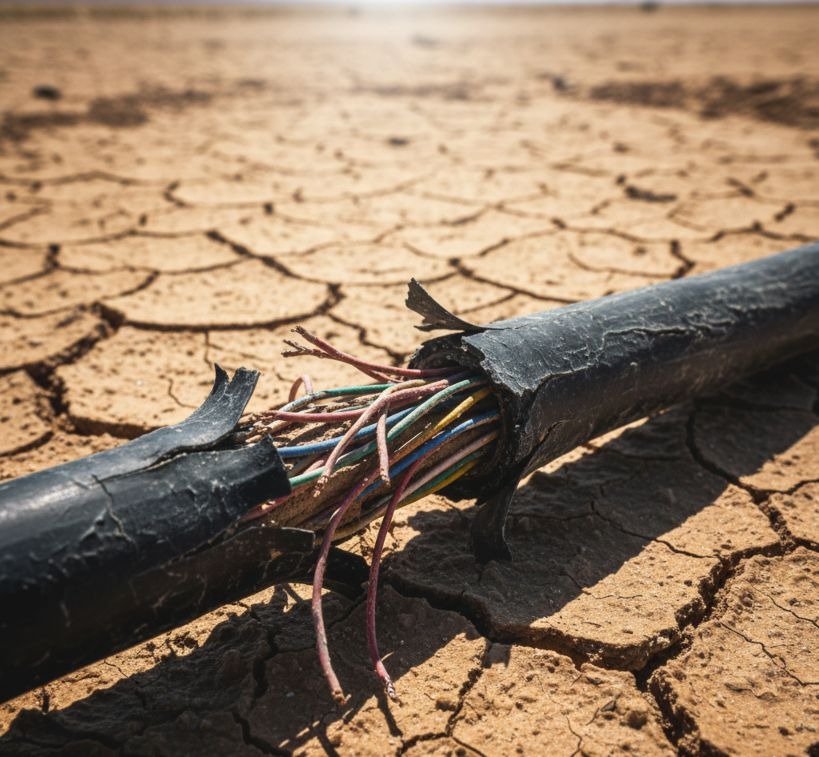
The Sun and Sand Challenge: Protecting Against Physical Wear
The dual threat of sun and sand creates a significant physical challenge. Intense, direct UV radiation breaks down the polymer chains in standard cable sheathing, causing it to lose flexibility and protective properties. This is compounded by the abrasive effect of wind-blown sand, which acts like a constant sandblaster, eroding the outer jacket of the cable over time. This is a key consideration for cable engineering in the Middle East.
To combat this, your specification should demand:
- UV-stabilized Sheathing Compounds: These contain special additives that resist the damaging effects of ultraviolet radiation, preventing the sheath from becoming brittle.
- Abrasion-resistant Outer Layers: Specifying materials known for their physical durability provides a robust defense against the constant scouring from desert sand.
The Humidity and Salinity Challenge: Preventing Corrosion and Short Circuits
For the many projects located along the GCC’s extensive coastline, high humidity combined with airborne salinity creates a highly corrosive environment. Moisture ingress is a primary cause of insulation failure and can lead to short circuits. This moisture, often carrying conductive salt particles, can penetrate even the smallest cracks in a cable’s sheath, corroding the conductors or metallic armor from the inside out.
The recommended solutions include:
- Moisture-resistant Barriers: Specifying cables with built-in water-blocking tapes or compounds that swell to prevent the longitudinal migration of water.
- Corrosion-resistant Armor: When metallic armor is required for mechanical protection, using materials like aluminum or specifying galvanized steel provides better resistance to the corrosive coastal air.

Conclusion: A Checklist for GCC Cable Specification
Specifying the correct cable is a critical step in mitigating risk and ensuring the long-term success of any project in the region. By addressing the environmental challenges head-on during the design phase, you can reduce maintenance needs, prevent costly downtimes, and achieve a lower total lifetime cost for your asset.
Here is a simple checklist for your next project specification:
- High-Temperature Insulation: Is the insulation (e.g., XLPE) rated for high ambient GCC temperatures?
- Derating Applied: Have ampacity calculations been properly derated for the installation environment?
- UV-Stabilized Sheath: Is the outer jacket specifically rated for UV resistance?
- Abrasion Resistance: Does the cable have a durable sheath to resist physical wear?
- Moisture Barriers: For critical or buried cables, are water-blocking features included?
- Corrosion Resistance: In coastal areas, is the armor made of a corrosion-resistant material?
Frequently Asked Questions (FAQ)
1. What is ‘derating’ and why is it critical for cable selection in the GCC?
Derating is the process of reducing a cable’s current-carrying capacity (ampacity) to account for external factors, primarily high ambient temperature. It’s critical in the GCC because the intense heat reduces the cable’s ability to dissipate its own heat, and failing to derate can lead to dangerous overheating and insulation failure.
2. Can standard PVC insulated cables be used outdoors in the Middle East?
While some PVC cables are rated for outdoor use, standard PVC is generally not recommended for exposed applications in the GCC. It is susceptible to thermal aging and embrittlement from the high heat and can be rapidly degraded by the intense UV radiation unless it is specifically formulated for these conditions.
3. How does sand abrasion affect a cable’s lifespan?
Constant exposure to wind-blown sand acts like a low-grade sandpaper, slowly eroding the cable’s protective outer sheath. Over time, this can wear the sheath down, exposing the underlying insulation to UV and moisture, which dramatically shortens the cable’s reliable service life.
4. What’s the difference between a UV-stabilized and a standard sheath?
A standard cable sheath can become brittle and crack when exposed to the sun’s UV rays. A UV-stabilized sheath contains chemical additives (like carbon black or hindered amine light stabilizers – HALS) that absorb or dissipate the UV radiation, protecting the plastic’s molecular structure and maintaining its flexibility and strength for much longer.
5. Is armored cable always necessary for heat resistant cables in a desert climate?
Not always. Armor is specified for mechanical protection against crushing or impact. While it can add a layer of physical durability, the core protection against heat, UV, and moisture comes from the selection of the proper insulation, sheathing, and barrier materials. The need for armor depends on the specific installation method (e.g., direct buried vs. in tray).
Call to Action
The complexities of the GCC environment demand expert attention to detail. Contact ElecWatts’ engineering team for a cable specification review tailored to your GCC project’s environment and requirements.