

Many business leaders believe that a robust insurance portfolio is the ultimate safety net. While insurance is a critical component of financial protection, it’s essential to recognize its fundamental limitation: insurance provides coverage after a loss occurs, but it can’t prevent the disruptive event from happening in the first place. Relying solely on insurance is like owning a first-aid kit without taking any steps to prevent accidents. This article will explore the crucial differences in the insurance vs risk management debate and explain how a proactive risk management strategy complements insurance to provide genuine, comprehensive protection for your organization.
Defining Insurance vs. Risk Management
To build a truly resilient business, it’s vital to understand the distinct roles these two concepts play. They are not interchangeable; they are two sides of the same protective coin.
- The Role of Insurance: Insurance is a mechanism of risk transfer. You pay a premium to an insurer, and in return, they agree to bear the financial burden of a specified loss. It is a reactive tool designed to restore you to the financial position you were in before a disruptive event occurred.
- The Role of Risk Management: Risk management is a proactive and systematic process of identifying, assessing, mitigating, and monitoring potential threats to an organization. Its goal is to reduce the likelihood and impact of negative events, thereby preventing losses before they happen. This is a strategic function that goes far beyond financial recovery.

The Gaps Insurance Leaves Open
Thinking that insurance alone isn’t enough is a crucial mindset shift. Even the most comprehensive insurance policies have inherent limitations and gaps that can leave a business vulnerable.
Here are a few examples of these gaps:
- High Deductibles and Waiting Periods: Nearly every policy includes a deductible—the amount you must pay out-of-pocket before coverage kicks in. For large claims, this can be a significant unplanned expense.
- Coverage Exclusions: Policies are highly specific and often contain exclusions for certain events, such as pandemics, acts of war, or certain types of cyber-attacks. If your loss falls under an exclusion, you receive no payout.
- Non-Insurable Risks: Many of the most significant threats a business faces are simply not insurable. These include reputational damage, loss of key employees, declining customer satisfaction, or technological obsolescence.
- Operational Disruption: An insurance check can replace a damaged piece of equipment, but it cannot win back the customers you lost during the downtime or repair the supply chain disruptions that followed.
Without a strategy to address the root causes of these risks, you will always be in a reactive state, absorbing operational and financial losses even when you have a policy in place.
Explore about Electrical Insurance & Risk Management at Elecwatts
What Risk Management Adds to the Equation
This is where the importance of risk management becomes clear. A formal risk management framework provides tangible benefits that insurance cannot. It’s about control, not just compensation.
Key components include:
- Risk Identification and Analysis: Proactively identifying potential threats across all business functions—from operational and financial to strategic and compliance risks.
- Preventive Controls: Implementing policies, procedures, safety audits, and employee training programs to reduce the frequency and severity of incidents. This is a core part of risks businesses face and mitigation strategies.
- Scenario Planning & Business Continuity: Developing robust plans to ensure operations can continue during and after a disruptive event. This minimizes downtime and protects revenue streams.
Ultimately, effective risk management reduces your reliance on insurance. By preventing claims from happening, you can lower your insurance premiums over time and optimize your coverage, demonstrating one of the key risk management benefits beyond insurance coverage.
Building a Comprehensive Risk Strategy
Understanding why you need both insurance and risk management is the first step. The next is to build a structured strategy.
- Start with a Risk Assessment: The foundation of any strategy is a thorough risk assessment. This process involves identifying potential threats, analyzing their likelihood and potential impact, and prioritizing them based on the level of risk they pose to your organization.
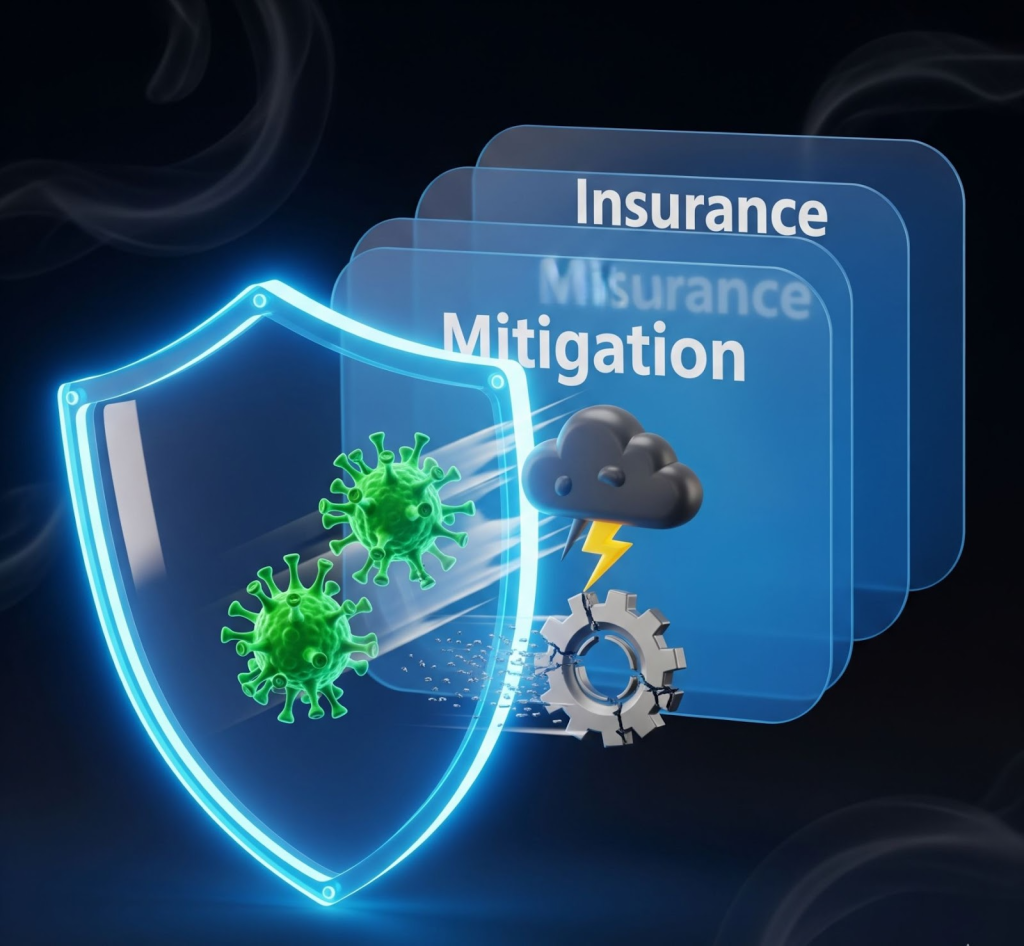
- Implement Layers of Defense: A mature strategy uses a multi-layered approach:
- Risk Avoidance: Deciding not to engage in an activity that is deemed too risky.
- Risk Mitigation: Implementing controls (e.g., safety protocols, cybersecurity software) to reduce the likelihood or impact of a risk.
- Risk Transfer: Purchasing insurance to transfer the financial impact of the remaining risk.
- Formalize and Monitor: Implement formal policies and provide employee training. The risk landscape is constantly changing, so it is essential to establish a cycle of monitoring, reviewing, and updating your strategy regularly.
Real-World Example: From Reactive to Proactive
Consider a manufacturing company that was experiencing a high frequency of minor workplace accidents. Their insurance premiums were steadily increasing due to the number of claims. By implementing a risk management program—which included enhanced safety training, regular equipment audits, and a new policy for reporting near-misses—they were able to reduce their incident rate by over 60% in two years.
The result? Not only did they create a safer workplace, but they were also able to negotiate a significant reduction in their workers’ compensation insurance premiums at their next renewal, saving them money that far exceeded the cost of the program.
Frequently Asked Questions (FAQ)
1. Is risk management only for large corporations?
No, risk management is scalable and essential for businesses of all sizes. A small business might have a simpler process, but identifying and mitigating risks like data security, key personnel dependency, or supply chain issues is just as critical for survival and growth.
2. How does risk management impact insurance costs?
Insurers favor businesses that can demonstrate a proactive approach to managing risk. By implementing formal safety, security, and continuity plans, you reduce the likelihood of filing a claim. Underwriters often reward this with lower premiums, as you are considered a lower-risk client.
3. What is the single most important step to start with risk management?
The most important first step is a comprehensive risk assessment. You cannot manage risks you haven’t identified. This process involves brainstorming potential threats with key team members, analyzing their potential impact, and prioritizing them to focus your resources effectively.
4. Can risk management eliminate all risks?
The goal of risk management is not to eliminate all risks—that is impossible in any business environment. The goal is to reduce risks to an acceptable, manageable level and to have clear plans in place for responding to incidents that do occur.
5. How are insurance and risk management related in a business strategy?
They are partners in building business resilience. Risk management is the proactive, preventative arm that reduces the frequency and severity of losses. Insurance is the reactive, financial backstop that helps the company recover from significant losses that could not be prevented. A comprehensive strategy needs both to be effective.
Conclusion
The most resilient organizations understand that the best defense is a proactive offense. While insurance is an indispensable tool for transferring financial risk, it is fundamentally a reactive measure. A strategic Insurance & Risk Management program provides the foresight and control needed to prevent incidents, protect your reputation, and ensure operational continuity. By blending proactive risk mitigation with a smart insurance strategy, you move beyond simple coverage and build a truly durable enterprise.
Ready to strengthen your defenses? Contact Elecwatts today for a professional risk assessment or to learn more about our integrated approach to business protection.